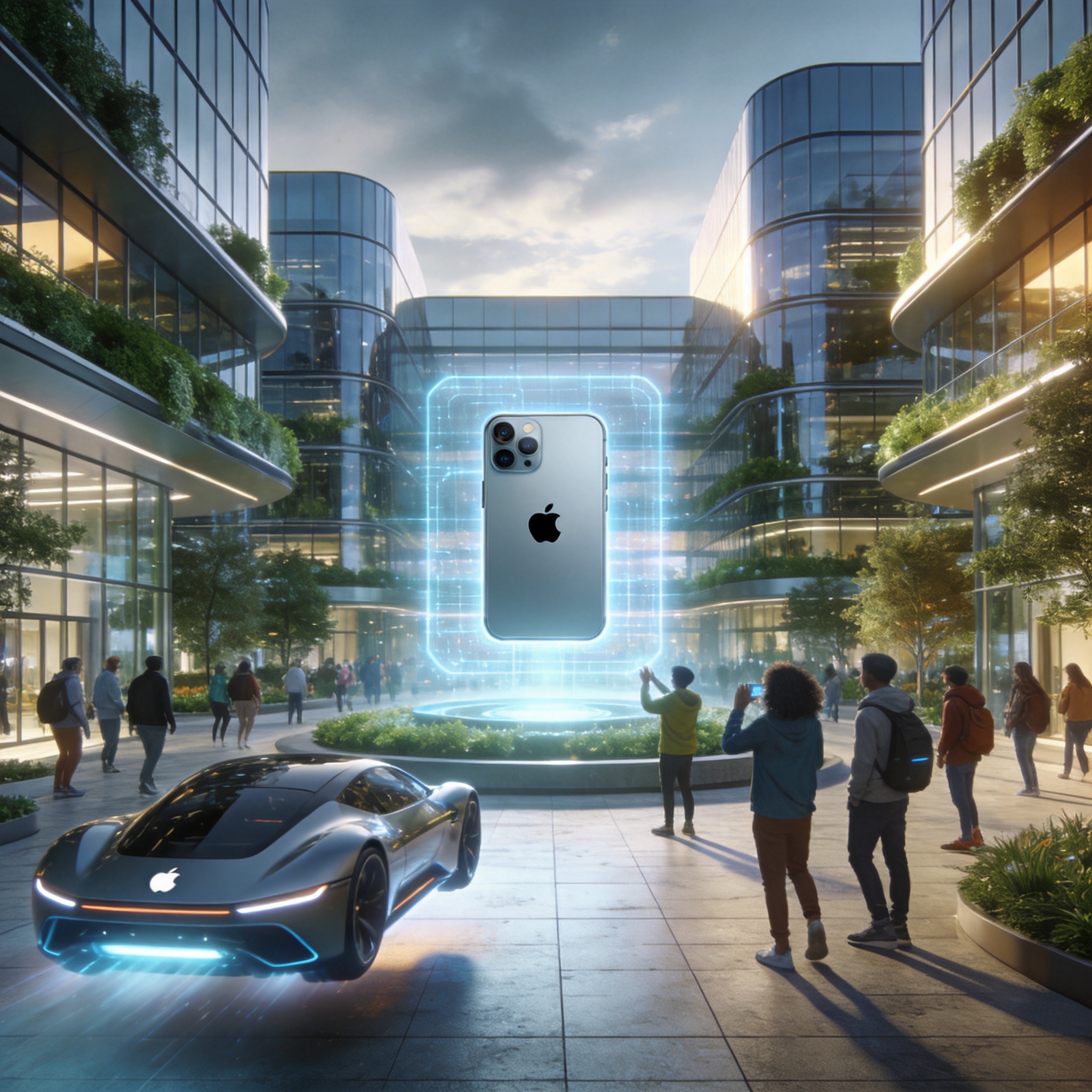
For nearly two decades, the iPhone has been Apple's heartbeat — the product that funded empires, reshaped industries, and turned a Cupertino campus into the most valuable piece of real estate in corporate history. But something is shifting. In 2026, Apple is no longer content to simply sell you a better rectangle. It wants to sell you an ecosystem, a lifestyle, a fold. The company that invented the modern smartphone is now quietly, methodically engineering what comes after it — and the roadmap ahead is more radical than anything Apple has attempted since Steve Jobs pulled the original iPhone from his pocket nineteen years ago.
The Fold Heard Around the World
It begins with a crease. After years of watching Samsung, Motorola, and a parade of Android manufacturers experiment with foldable form factors, Apple is finally ready to make its move — and it is doing so with characteristic precision. The iPhone Fold, expected to arrive in fall 2026, is rumored to feature a 5.3-inch external display that unfolds into a sprawling 7.6-inch inner screen, offering users something genuinely new: a device that is both a phone and a tablet, depending entirely on the moment 21. According to MacRumors, the internal display is expected to measure approximately 7.8 inches when fully open 21, putting it in direct competition with Samsung's Galaxy Z Fold series — though Apple, as always, will be betting that its integration of hardware and software makes the comparison feel almost unfair.
This is not merely a new product. It is a statement. Apple has historically entered hardware categories late and exited them dominant, and the foldable market is no exception to that pattern. The Information reported that Apple has been reworking its iPhone release schedule specifically to accommodate the Fold and a new ultrathin model, signaling a structural shift in how the company thinks about its flagship lineup 4. Rather than a single annual hero device, Apple appears to be building a portfolio — a range of form factors designed to capture different kinds of users at different price points.
The iPhone 18 family will anchor the 2026 lineup alongside the Fold, with TechTimes reporting that Apple's roadmap could include as many as seven main models across both the standard iPhone 18 series and the foldable category 6. Among the most talked-about additions is a mechanical variable aperture camera system being tested for the iPhone 18 Pro, a feature that would bring DSLR-like photographic control to a smartphone for the first time in Apple's history 25. These are not incremental upgrades. These are the moves of a company that knows its core product must evolve or risk becoming furniture — familiar, useful, but no longer exciting.
---
"Apple is not just updating iOS — it is redefining what an operating system is supposed to do."
iOS 26 and the Intelligence Layer

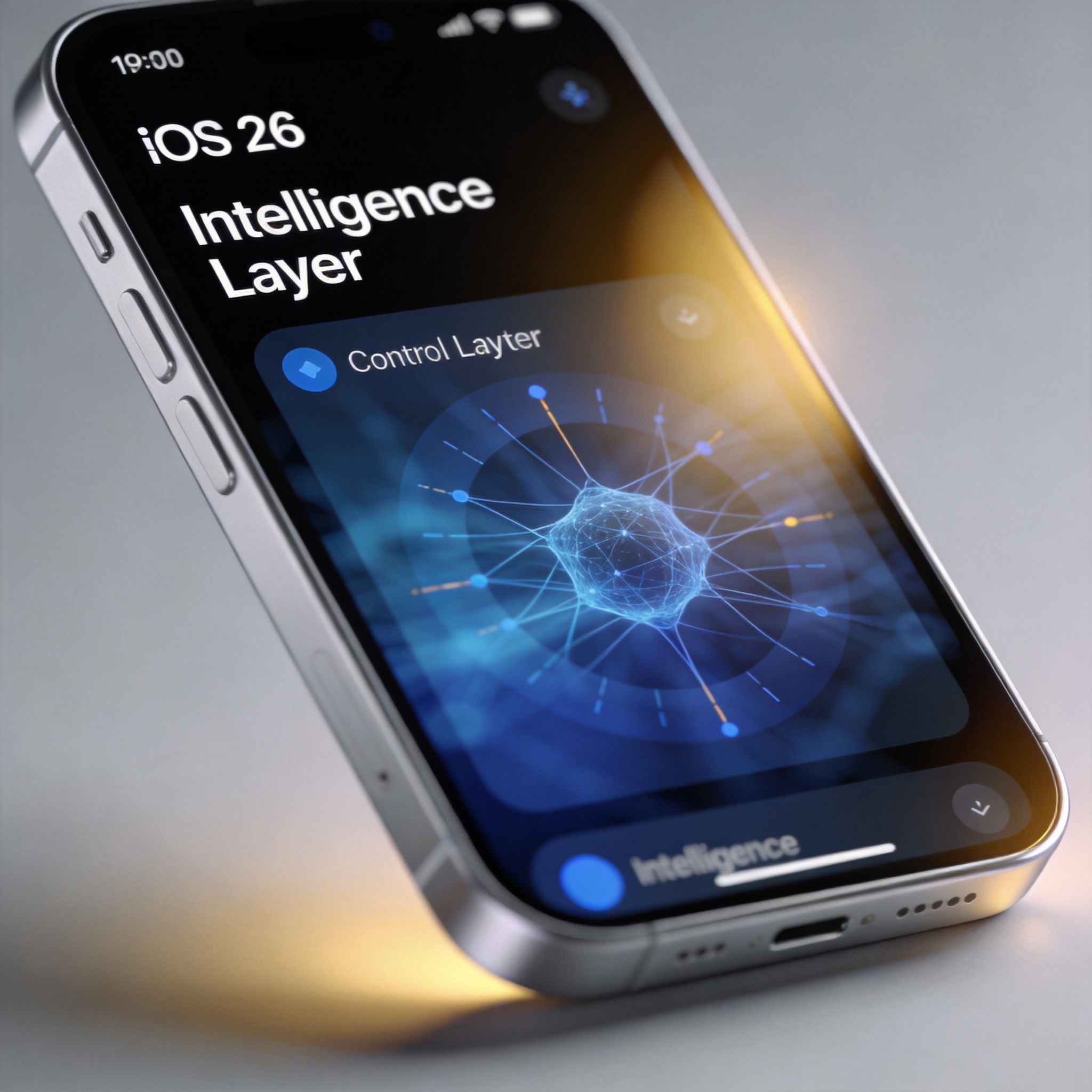
Hardware tells only half the story. The other half is written in software, and iOS 26 may be the most consequential operating system Apple has shipped in years. Described by Apple itself as featuring "a new design, more helpful Apple Intelligence, polls and backgrounds in Messages, and features that make every day effortless," iOS 26 represents a deliberate attempt to make the iPhone feel less like a tool and more like a collaborator 3. The language Apple uses — effortless, intelligent, helpful — is not accidental. It is aspirational branding for a future in which your phone anticipates rather than simply responds.
Adoption has been swift. According to telemetry data from TelemetryDeck, iOS 26 had already captured approximately 55 percent of active iPhone devices by the end of 2025, with adoption continuing to climb into the new year 1. That is a remarkable penetration rate for a major OS release, and it speaks to the loyalty — some would say dependency — that Apple has cultivated among its user base. When Apple ships a new operating system, its customers follow. That kind of platform control is something no Android manufacturer has ever fully replicated.
The intelligence layer embedded in iOS 26 is where the real ambition lives. Apple Intelligence, first introduced in 2024, has matured into a system that touches nearly every native application — from summarizing notifications to generating contextual responses in Messages. Crucially, Apple has built its AI features around on-device processing and privacy, a differentiation strategy that positions it against OpenAI and Google in a way that resonates with a privacy-conscious consumer base. Developers, meanwhile, are being given new tools through updated APIs to integrate Apple Intelligence into third-party apps 18, effectively turning the entire App Store ecosystem into an AI-powered platform.
This is the operating system as operating philosophy. Apple is not just updating iOS — it is redefining what an operating system is supposed to do.
---
"The iPhone era is not ending. It is evolving into something larger, stranger, and considerably more expensive."
Services, the Silent Colossus
While the world watches for the next iPhone announcement, Apple's quietest revolution has already happened. The company's services division — encompassing the App Store, Apple Music, Apple TV+, iCloud, Apple Pay, and more — recorded a record-breaking year in 2025, with Apple's own newsroom describing it as marked by "unprecedented growth, global expansion, and continuous innovation" 9. This is no longer a supporting act. Services is increasingly the main event, generating high-margin recurring revenue that insulates Apple from the volatility of hardware sales cycles in ways that even the most loyal iPhone buyer cannot.
The strategic logic is elegant and, by now, well-established: sell the hardware at a premium, then monetize the relationship for years afterward. Every iPhone sold is a gateway to an Apple One subscription, an iCloud storage tier, an App Store transaction. The ecosystem is the product. The iPhone is the key. And as Apple expands services into new markets — health, financial services, spatial computing — the revenue streams multiply in ways that make the company's long-term financial position almost structurally unassailable.
What is changing in 2026, however, is the ambition of those services. Apple is expected to introduce a new Home Hub device, a smart home display that would bring Siri and Apple Intelligence into the living room in a dedicated, always-on form factor 15. This is Apple making a direct play for the smart home market that Amazon's Echo and Google's Nest have occupied for a decade. It is a significant expansion of the services footprint — because a HomePad or Home Hub is not just a speaker or a screen. It is another subscription surface, another node in the Apple network, another reason for a consumer to stay inside the walled garden rather than climb over the fence.

"Every iPhone sold is a gateway — the ecosystem is the product, and the iPhone is merely the key."
The Post-iPhone Identity
Here is the uncomfortable question that no Apple earnings call will ever quite answer: what happens to Apple when the iPhone is no longer the center of gravity? The question is not hypothetical. Unit sales of smartphones globally have plateaued, and even Apple's extraordinary pricing power has limits. The company shipped the iPhone 12 and later models with iOS 26 compatibility, while quietly retiring support for the XR, XS, XS Max, 11, and SE second generation — a reminder that the hardware cycle has a natural ceiling, and that Apple is constantly managing a device population with a finite lifespan 5.
The answer, increasingly, seems to be that Apple's post-iPhone identity is not a single product but a platform — spatial, wearable, foldable, and intelligent all at once. The Vision Pro, Apple Watch, AirPods, and now the iPhone Fold represent different entry points into the same interconnected world. Apple is not replacing the iPhone. It is surrounding it with so many other devices, services, and experiences that the question of which product matters most becomes almost irrelevant.
This is a profound strategic shift, and it mirrors the transformation Apple underwent when it moved from being a computer company to being a consumer electronics and services company in the early 2000s. The company has always been willing to cannibalize its own products before a competitor can do it for them — a philosophy often attributed to Steve Jobs but now embedded in the institutional DNA of Apple under Tim Cook. The foldable iPhone is, in a very real sense, Apple cannibalizing the traditional iPhone before someone else does 2.
What Apple is building in 2026 is not a product. It is a gravitational field — one designed to pull users deeper into an ecosystem so rich, so interconnected, and so carefully designed that leaving it feels less like a choice and more like an upheaval. The iPhone era is not ending. It is evolving into something larger, stranger, and considerably more expensive.
---