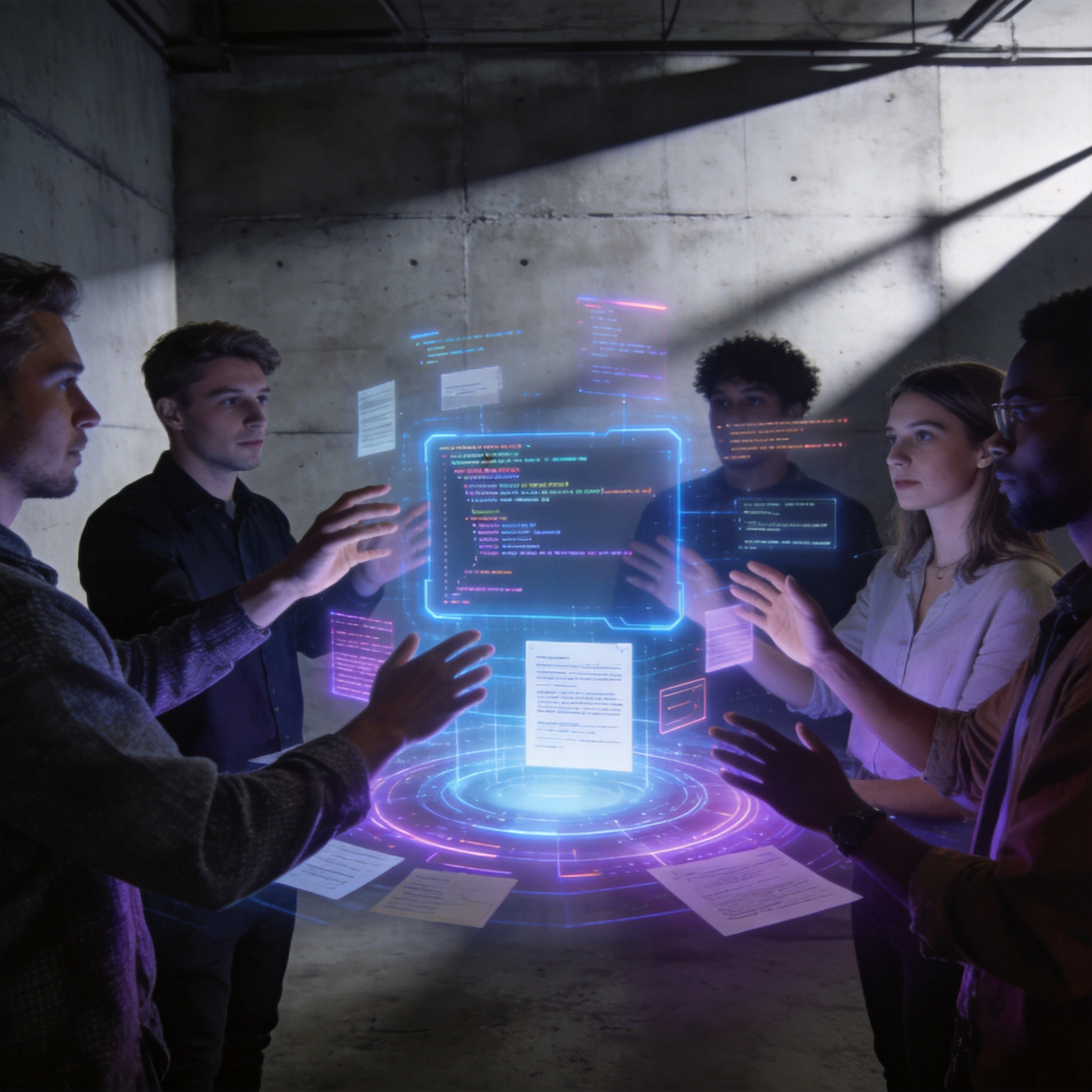
Not long ago, the blank page was the great equalizer — the terrifying, democratic void that every writer, designer, and artist faced alone. Today, that void has a collaborator. Generative AI has moved from novelty to necessity at a speed that has left entire industries scrambling to catch up. The question is no longer whether artificial intelligence belongs in the creative process. It is already there, embedded in workflows, whispering suggestions, generating drafts, and producing images in seconds. The real question — urgent, uncomfortable, and deeply human — is what this means for the people whose lives are built around making things.
The Numbers Don't Lie — Creators Have Already Crossed the Line
The tipping point, it turns out, happened quietly. According to Adobe's 2025 Creators' Toolkit Report, 86% of creators now actively use generative AI in their work, with 88% reporting faster content production as a direct result 1. Read those numbers again. This is not a fringe movement or an early-adopter experiment. This is the overwhelming majority of people who make things for a living, reshaping their practice around a technology that barely existed in its current form three years ago.
The shift is visible across every discipline. Graphic designers are generating mood boards in minutes rather than days. Copywriters are using AI to stress-test headlines, iterate on brand voice, and move from brief to first draft at a pace that would have seemed impossible in 2022. According to data compiled by Siege Media, AI writing tools have become standard fixtures in content marketing workflows, with adoption accelerating sharply throughout 2025 14. The creative studio — once a place of labored solitude — has become something closer to a control room.
What is driving this adoption is not laziness, despite what critics suggest. It is, more often, ambition. Creators are using AI to do more: more concepts, more iterations, more experimentation. As Medium's analysis of generative AI across industries notes, AI has emerged as a robust brainstorming partner, encouraging creators to explore more concepts faster than ever before 3. A freelance illustrator who once presented three options to a client can now present fifteen, each one a genuine creative proposition rather than a rushed compromise.
There is also a democratizing force at work here. Tools that once required expensive software licenses, years of technical training, or large agency budgets are now accessible to independent creators, small studios, and first-time entrepreneurs. The barriers to entry for high-quality creative production have collapsed. That collapse is exhilarating for some and existential for others — and the industry is still deciding which response is more appropriate.
---
""The blank page has a collaborator now — and the creative professions are still deciding whether to shake its hand.""
The Collaboration Nobody Planned For
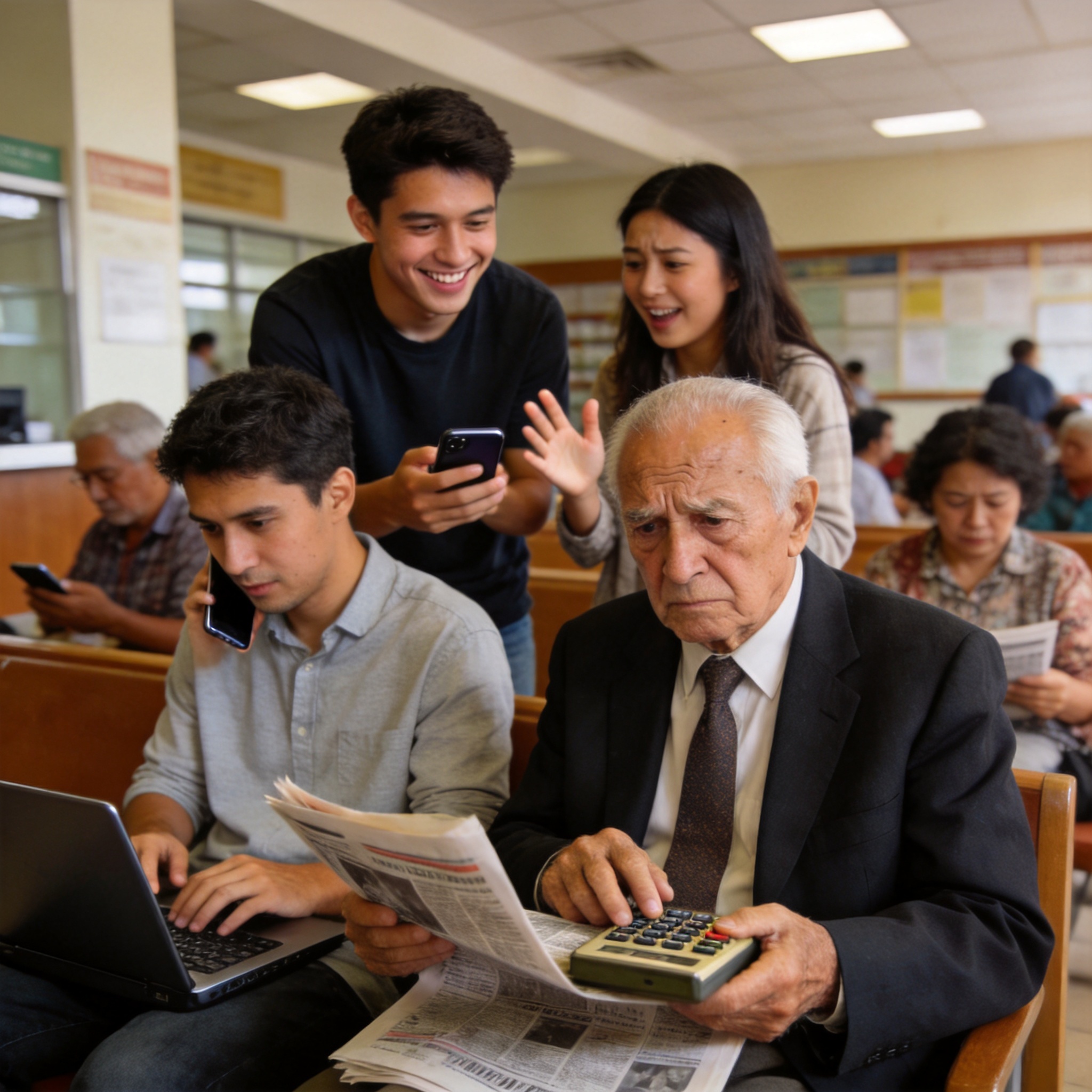
Perhaps the most striking finding to emerge from recent research is not about speed or efficiency — it is about inspiration. Scientists studying the relationship between AI and human cognition recently found that AI can function as a creative collaborator that actively encourages exploration, engagement, and inspiration, not merely as a tool that executes instructions 25. In other words, working alongside AI does not flatten creativity. For many people, it amplifies it.
Novelist Robin Sloan offers one of the most compelling illustrations of this dynamic. Sloan uses an AI model trained on classic science fiction to suggest lines mid-writing — not to replace his voice, but to jostle it, to introduce unexpected directions that his own habits of thought might never have generated. The result is a kind of productive friction, a creative conversation between human intention and machine suggestion that produces something neither party could have reached alone. This is not ghostwriting. It is something stranger and more interesting.
The World Economic Forum, writing in early 2026, framed the challenge with precision: future creatives must become both AI-native and human-native — understanding AI deeply while also anticipating its cultural impact [WEF source]. That dual fluency is becoming the defining professional skill of the decade. It is not enough to know how to use the tools. Creators must understand what the tools cannot do, where they flatten nuance, where they default to the statistically average rather than the genuinely surprising.
The Atlantic captured this tension with characteristic clarity, noting that while AI research is empirical — you can verify when something works and tweak when it does not — art resists rules in a way that makes it fundamentally resistant to full automation [recent news]. A machine can learn the grammar of a great short story. It cannot yet feel the specific weight of grief that makes one sentence land differently than another. That gap, however narrow it may become, remains the territory where human creativity lives.
Autodesk's 2025 State of Design and Make Report adds a layer of institutional anxiety to this picture: 55% of Media and Entertainment leaders believe AI will destabilize the industry 4. Destabilize — not destroy, not improve. The word is deliberately unsettled, and that unsettledness is honest.
---
""AI can learn the grammar of a great short story. It cannot yet feel the specific weight of grief that makes one sentence land differently than another.""
Roles Are Shifting — And Not Everyone Is Keeping Up
The creative professions are not disappearing. They are mutating, and the mutation is happening faster than most training programs, academic curricula, or professional associations are equipped to handle. Research published by research.com on the future of creative writing careers identifies a clear pattern: AI-driven tools are automating routine content generation, requiring creative professionals to focus on unique narrative craft and higher-order judgment rather than volume production 6. The person who thrives in this environment is not the fastest typist or the most technically proficient designer. It is the person with the sharpest editorial instincts, the clearest sense of purpose, and the most refined understanding of audience.
This shift is already reshaping job descriptions in real time. Content strategists are being asked to oversee AI-generated output rather than produce copy from scratch. Art directors are becoming curators and prompt architects, selecting and refining AI-generated visual concepts rather than executing every element by hand. According to Upwork's State of AI report, the demand for creative professionals who can direct and edit AI output is rising sharply, even as demand for certain entry-level production tasks declines 21. The ladder has not been removed. It has been rearranged.
For younger creators entering the field, this creates a particular kind of pressure. The traditional apprenticeship model — where junior talent learned craft by doing the repetitive, foundational work that seniors had long outgrown — is being disrupted. If AI handles the first draft, the rough cut, the initial layout, where does a junior designer or writer develop their instincts? This is not a hypothetical concern. It is a structural challenge that creative industries are only beginning to confront seriously.
The Forbes analysis of AI's trajectory in 2026 predicts that the professionals who will succeed are those who treat AI as an accelerant rather than a replacement — using it to move faster on the mechanical elements while investing more deeply in the strategic and emotional dimensions of their work 2. That reframing requires not just new tools but a new professional identity. And professional identities, unlike software, do not update overnight.
---

""The professional who will thrive is not the fastest typist — it is the person with the sharpest instincts, the clearest purpose, and the wisdom to know what a machine cannot feel.""
The Ethics Nobody Wants to Talk About — But Must
Underneath the productivity gains and the collaboration breakthroughs, a harder conversation is taking place. It concerns authorship, ownership, compensation, and the cultural value of creative labor. These are not abstract philosophical questions. They have immediate, material consequences for working artists, writers, musicians, and designers whose livelihoods depend on the answers.
The training data problem sits at the center of the debate. Generative AI systems learn by ingesting vast quantities of human-made creative work — novels, illustrations, photographs, musical compositions — often without the explicit consent of the people who made them and without any mechanism for compensation. The legal and ethical frameworks governing this practice remain unresolved in most jurisdictions, and the pace of litigation is nowhere near the pace of deployment 5. Creators are being asked to adapt to a world shaped partly by their own uncredited work.
The World Economic Forum's 2026 analysis notes that as AI rises, so does the need for more human creativity — but it also acknowledges that this demand must be paired with systems that actually value and compensate the humans doing the creating [WEF]. Without those systems, the democratization of creative tools risks becoming something more troubling: the commodification of creative output, with the economic benefits flowing primarily to the platforms and companies that own the models.
Recent studies predict that by 2026, as much as 90% of all online content could carry some degree of AI involvement 7. If that projection holds, the internet's creative ecosystem will look fundamentally different from anything that existed before — and the question of what counts as authentic, original, or human will become not just philosophical but commercial. Brands, publishers, and audiences are already beginning to make distinctions, however imprecisely, between AI-assisted work and AI-generated work. Those distinctions will sharpen.
What is clear is that the creative professions need more than new tools. They need new agreements — between platforms and artists, between employers and employees, between the technology industry and the broader culture it is reshaping. The World Economic Forum's call for AI-native and human-native fluency is necessary but not sufficient. Fluency without equity is just a more sophisticated form of exploitation.
---