The Telescope That's Breaking the Universe
NASA's James Webb Space Telescope is dismantling decades of cosmic theory, one stunning image at a time.
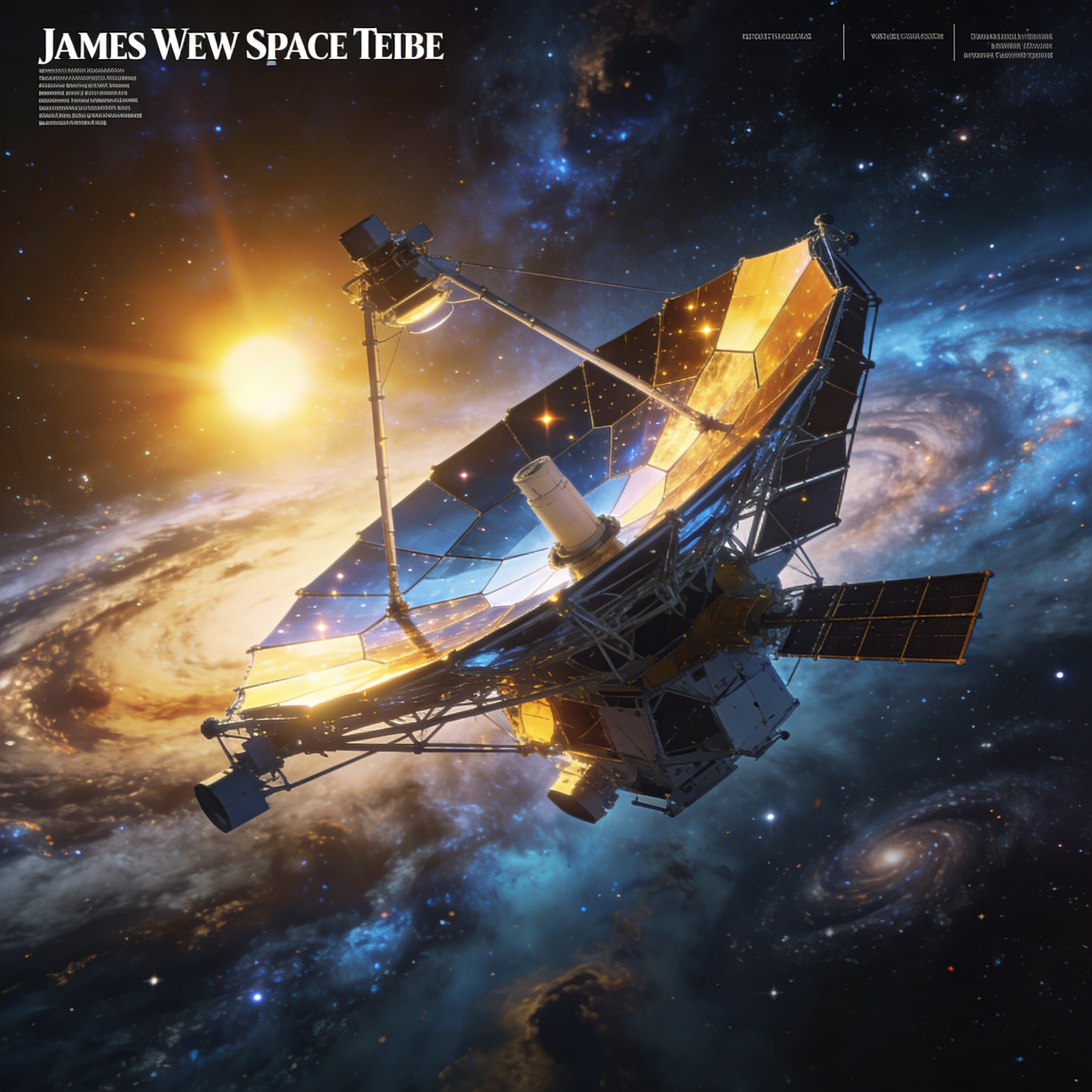
In December 2021, a golden, hexagon-mirrored machine the size of a tennis court folded itself into a rocket and launched into the dark. Scientists who had spent thirty years building it held their breath. What the James Webb Space Telescope has sent back since then has done something almost no instrument in the history of science has managed: it has made experts question everything. Not some things. Everything. The universe, it turns out, is older, stranger, and far more crowded than we ever dared imagine.
In December 2021, a golden, hexagon-mirrored machine the size of a tennis court folded itself into a rocket and launched into the dark. Scientists who had spent thirty years building it held their breath. What the James Webb Space Telescope has sent back since then has done something almost no instrument in the history of science has managed: it has made experts question everything. Not some things. Everything. The universe, it turns out, is older, stranger, and far more crowded than we ever dared imagine.
A Window Into the Cosmic Dawn
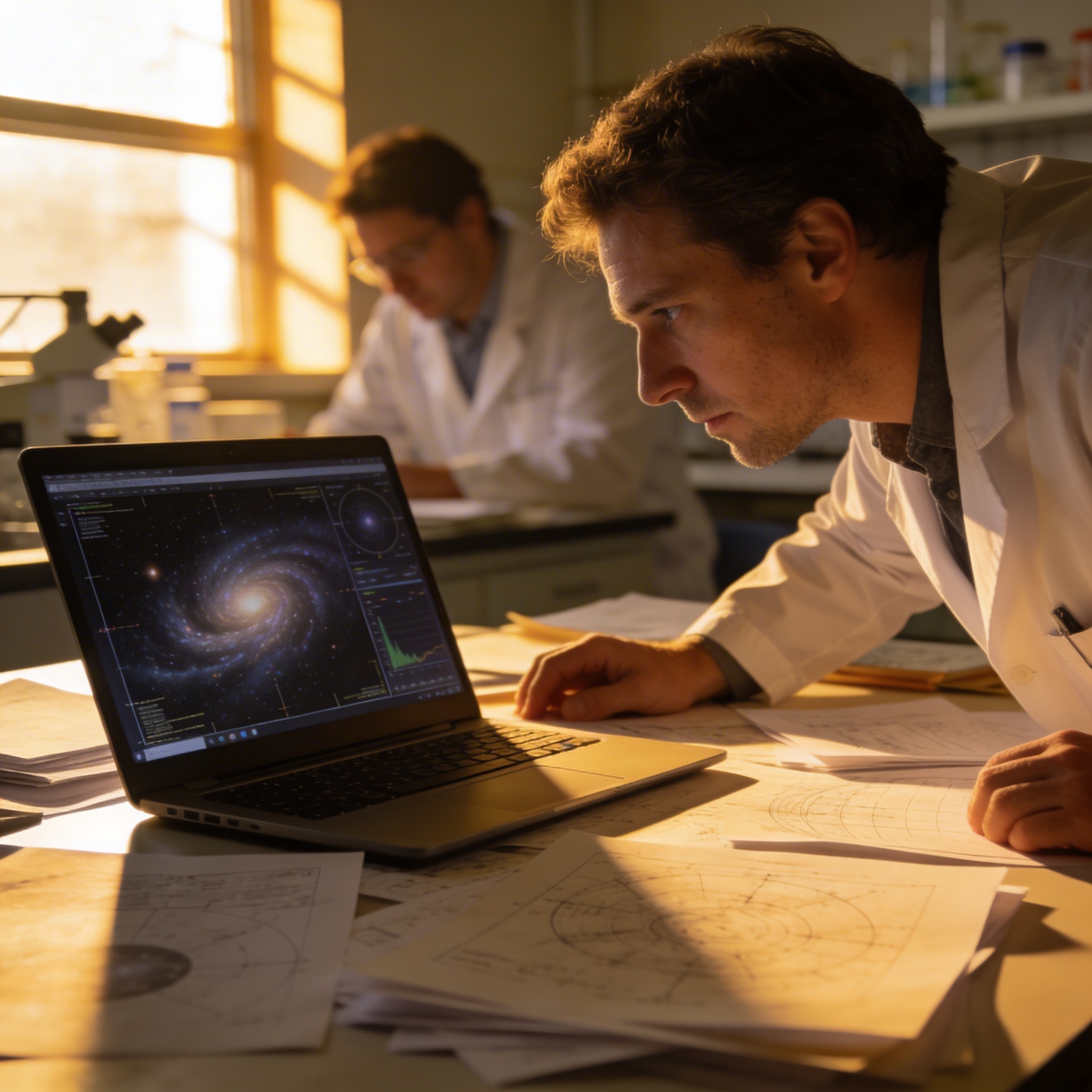
There is a moment, deep in the universe's infant history, that astronomers call the Cosmic Dawn — the era when the first stars and galaxies ignited and flooded the darkness with light for the very first time. For decades, this moment existed primarily in theory, tucked inside equations and computer simulations, because no telescope was powerful enough to actually see it. The James Webb Space Telescope changed that almost immediately after it opened its eyes.
What Webb found was not what anyone predicted. According to NASA, the telescope studies every phase in the history of the universe, ranging from the first luminous glows after the Big Bang to the formation of solar systems capable of supporting life [7]. But the galaxies it began detecting in those earliest epochs were not the dim, small, embryonic structures that models had forecast. They were bright. Startlingly, almost impossibly bright. And there were far more of them than the standard model of cosmology had any right to expect [1].
In just three years of operations, Webb has brought the distant universe into focus, revealing unexpectedly bright and numerous galaxies that have sent theorists scrambling back to their whiteboards [6]. The International Space Science Institute noted that "JWST is rewriting humanity's understanding of how galaxies — like our own Milky Way — grew in the early universe and formed the elements that make us who we are" [8]. That is not the cautious language of incremental science. That is the vocabulary of revolution.
Researchers have also uncovered what may be missing links in galaxy evolution itself. A discovery published in *The Astrophysical Journal Letters* challenged current models of the universe, pushing back the timeline of galactic formation even further than previously accepted [15]. Webb is not merely filling in gaps in the map. It is redrawing the map entirely — and in some places, revealing that the map was wrong from the very first line.
---
""The universe, it turns out, is older, stranger, and far more crowded than we ever dared imagine.""
Black Holes That Should Not Exist
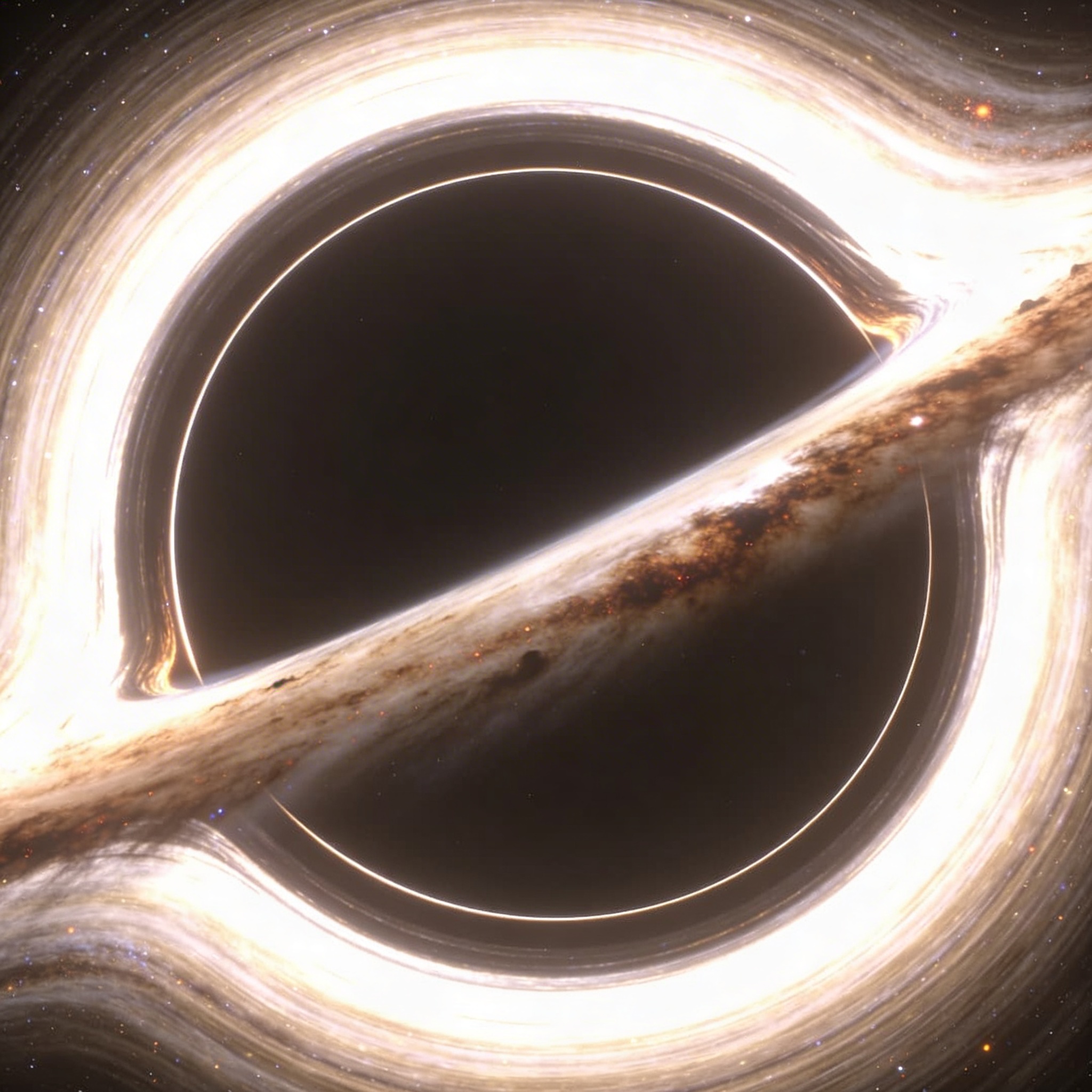
If the galaxy discoveries rattled cosmologists, the black hole findings have left them genuinely unnerved. Supermassive black holes — the colossal gravitational engines that sit at the centers of large galaxies — were supposed to grow slowly, accumulating mass over billions of years through a relatively well-understood process. Webb has shown that assumption to be spectacularly incorrect.
For years, the James Webb Space Telescope has been spotting enormous black holes in the early universe that defy all expectations [12]. These are not modestly oversized objects. These are fully formed, supermassive black holes existing in a universe that was only a few hundred million years old — a universe that simply had not had enough time, by any conventional reckoning, to build them. Scientists described the situation plainly: it is "a real revolution" [12].
The implications run deeper still. Recent James Webb Space Telescope data has confirmed a decade-old theory that the universe's earliest supermassive black holes may have formed through a process called "direct collapse" — bypassing the usual stellar evolution entirely and emerging directly from vast clouds of primordial gas [4]. This is not a minor amendment to existing theory. It is an entirely different origin story, one that changes how scientists understand the relationship between black holes and the galaxies that surround them.
Webb has also been examining 70 dusty galaxies at the very edge of the observable universe, and researchers have found that these objects challenge our understanding of the cosmos in ways that are still being untangled [recent news]. The sheer density of massive structures in the early universe — black holes, fully formed galaxies, dense stellar clusters — suggests that whatever process kick-started cosmic structure formation was far more efficient, and far more rapid, than any model currently accounts for. The universe, it seems, grew up very, very fast.
---
""Webb is not merely filling in gaps in the map. It is redrawing the map entirely — and in some places, revealing that the map was wrong from the very first line.""
The Hubble Tension and an Expanding Mystery
Not all of Webb's revelations are about the distant past. Some of its most unsettling findings concern something happening right now, all around us, at every moment: the expansion of the universe itself. For years, cosmologists have wrestled with what they call the "Hubble Tension" — a stubborn, maddening discrepancy between two different methods of measuring how fast the universe is expanding. The two methods produce different answers, and nobody can agree on why.
The James Webb Space Telescope, working alongside the veteran Hubble Space Telescope, has not resolved this tension. It has confirmed it [5]. Measurements made using Cepheid variable stars — the gold-standard cosmic distance markers — have been cross-checked and refined by Webb's superior optics, and the discrepancy remains. The universe, depending on how you measure it, appears to be expanding at meaningfully different rates. This is not a rounding error. It is a crack in the foundation of modern cosmology.
Some physicists now believe the Hubble Tension may be pointing toward genuinely new physics — perhaps a previously unknown form of dark energy, perhaps a flaw in the standard cosmological model, perhaps something stranger still. Nautilus, reporting on the broader implications, noted that the tension is prompting serious scientists to reconsider assumptions baked into our understanding since the Big Bang itself [21]. Webb has not broken the universe. But it has confirmed, with uncomfortable precision, that something in our best description of the universe is broken.
In 2025, NASA's James Webb Space Telescope continued to amaze, from exploring the atmospheres of distant exoplanets to shining light on unresolved mysteries of cosmic expansion [3]. The telescope's infrared vision, which allows it to peer through dust clouds and across vast cosmic distances, gives it a precision that previous instruments simply could not match. Every answer it provides seems to arrive wrapped in three new questions. That, scientists will tell you, is exactly what a great instrument is supposed to do.
---
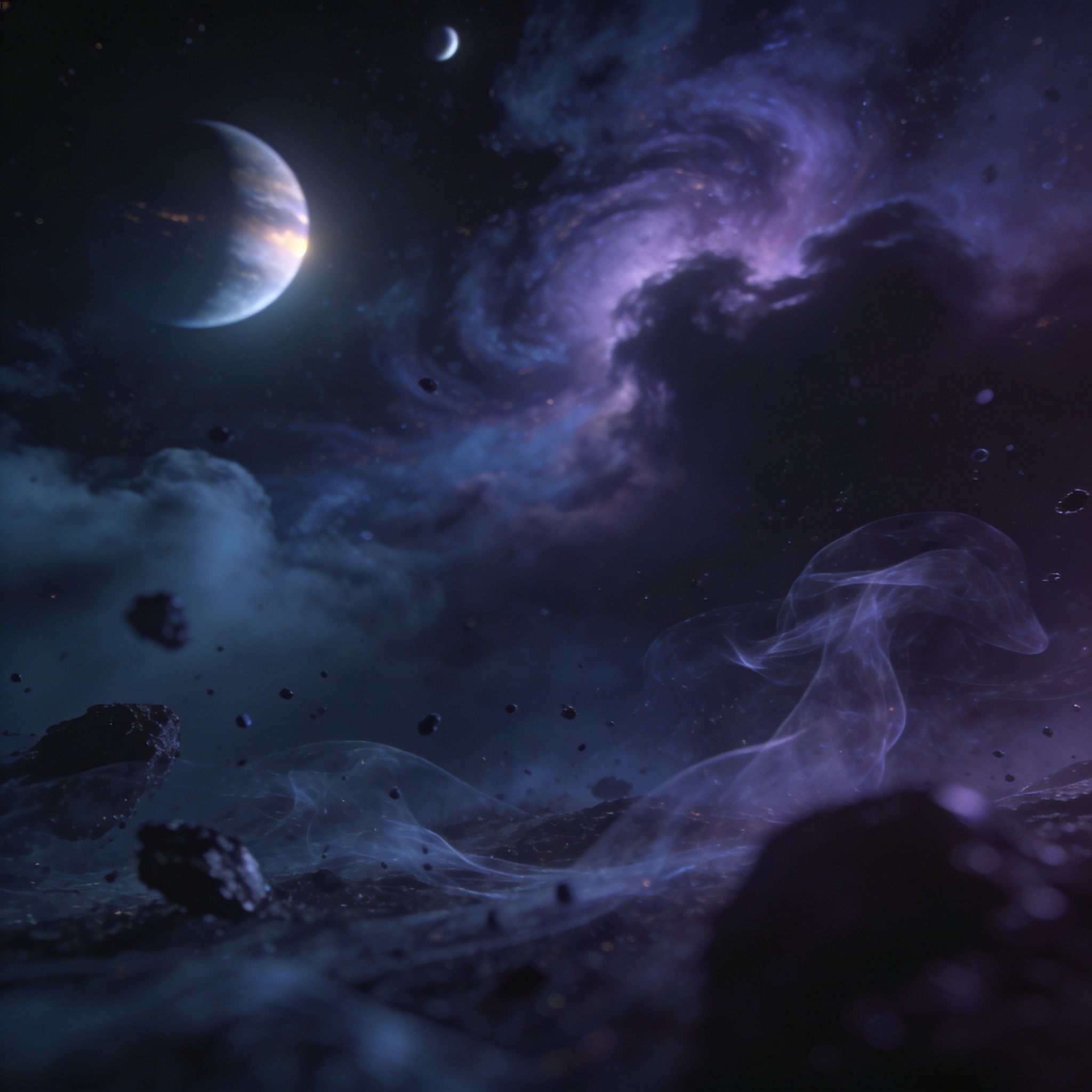
""The universe is 13.8 billion years old. Humanity has been seriously studying it for less than a century. Webb is a reminder of how much we do not yet know — and a blazing, gold-mirrored argument that the asking is worth every penny.""
Exoplanets, Dark Matter, and the Next Frontier
Beyond the grand questions of cosmological history, Webb is also transforming our understanding of worlds far closer to home — cosmically speaking. The telescope has become an unprecedented tool for analyzing the atmospheres of exoplanets, the distant worlds orbiting other stars, and what it has found there is beginning to reshape the search for life beyond Earth.
Webb's infrared spectrometers can dissect the chemical fingerprints of exoplanet atmospheres with a sensitivity no previous telescope could approach. In 2025, NASA confirmed the telescope was exploring the atmospheres of distant exoplanets in detail that has opened an entirely new window on the hidden chemistry of alien worlds [3]. Researchers at The Hill have noted that these atmospheric studies are bringing scientists closer than ever to the possibility of detecting genuine biosignatures — chemical signs of life — on distant planets [19]. The implications of that, should it happen, would dwarf every other discovery in human history.
Webb is also illuminating the invisible architecture of the universe. Researchers at Arizona State University and the University of California, Riverside, have used Webb data to reveal new details about dark matter — the mysterious, unseen substance that makes up roughly 27 percent of the universe's total mass-energy content but has never been directly observed [13] [14]. Webb's observations of how light bends around massive structures, a phenomenon called gravitational lensing, are providing the sharpest constraints on dark matter's distribution ever recorded.
Carnegie Science summarized the telescope's broader legacy succinctly after cataloguing six of its wildest discoveries: when JWST launched on Christmas Day 2021, it promised to revolutionize our view of the cosmos — and three years in, it has kept that promise many times over [recent news]. Webb has now identified starburst galaxies, probed the cosmic web, and detected molecules in deep space that have rewritten assumptions about stellar chemistry [15]. It has done all of this in just three years of science operations, with potentially decades more to come.
The universe is 13.8 billion years old. Humanity has been seriously studying it for less than a century. Webb is a reminder of how much we do not yet know — and a blazing, gold-mirrored argument that the asking is worth every penny.
---
Sources & References 22
- nationalgeographic.com
- youtube.com
- facebook.com
- space.com
- futura-sciences.com
- phys.org
- science.nasa.gov
- issibern.ch
- sciencedaily.com
- formacionpoliticaisc.buenosaires.gob.ar
- mcdonaldobservatory.org
- livescience.com
- news.asu.edu
- news.ucr.edu
- scitechdaily.com
- web.nutritionjobs.com
- esawebb.org
- snexplores.org
- thehill.com
- foxweather.com
- nautil.us
- stsci.edu