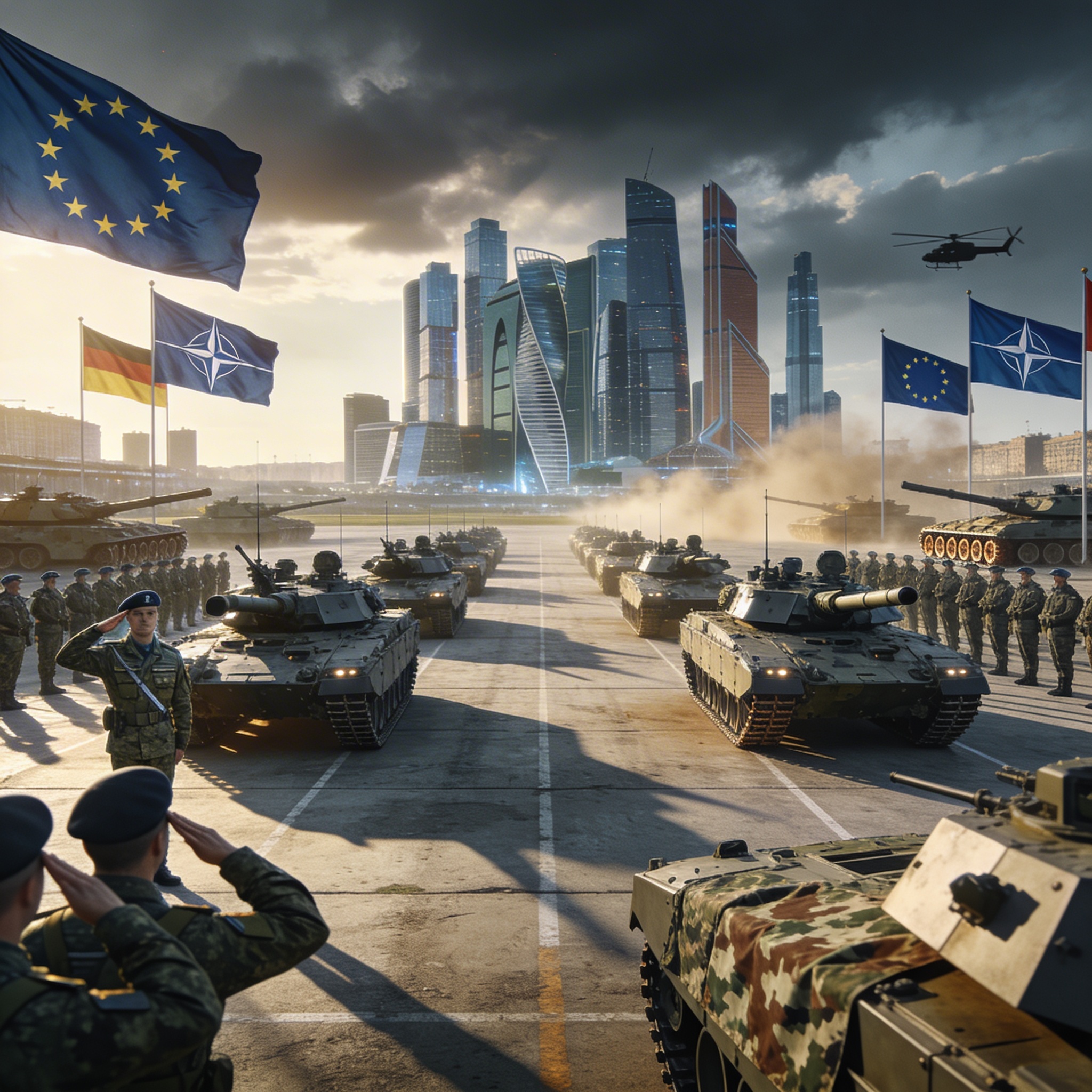
Iran War Sends Shockwaves Through the Global Economy
From oil fields to grocery aisles, the 2026 Iran conflict is rewriting the rules of global economic stability.
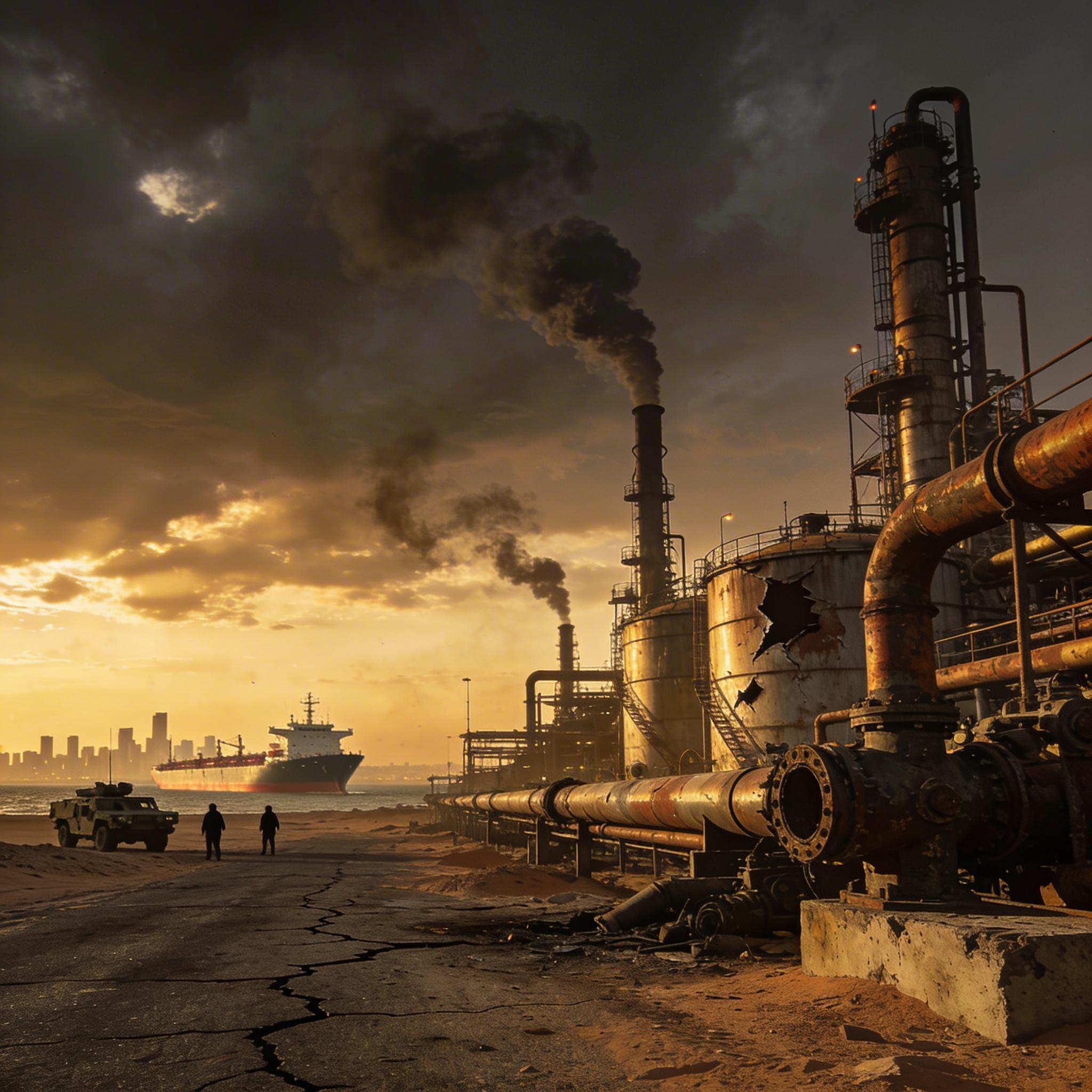
When the first U.S.-Israeli strikes hit Iranian soil in late February 2026, the shockwaves didn't just rattle the Middle East — they detonated across every stock exchange, fuel pump, and grocery store on the planet. Within 24 hours, oil prices climbed nearly 7 percent [9], airline routes went dark, and economists who had cautiously celebrated a post-pandemic recovery suddenly found themselves revising forecasts downward at a frantic pace. The Iran war didn't merely disrupt a region. It exposed just how fragile — and deeply interconnected — the global economy truly is.
When the first U.S.-Israeli strikes hit Iranian soil in late February 2026, the shockwaves didn't just rattle the Middle East — they detonated across every stock exchange, fuel pump, and grocery store on the planet. Within 24 hours, oil prices climbed nearly 7 percent [9], airline routes went dark, and economists who had cautiously celebrated a post-pandemic recovery suddenly found themselves revising forecasts downward at a frantic pace. The Iran war didn't merely disrupt a region. It exposed just how fragile — and deeply interconnected — the global economy truly is.
The Oil Price Earthquake Nobody Was Fully Prepared For
Iran is no minor player in the world's energy architecture. As the fourth-largest OPEC producer and guardian of the critical Strait of Hormuz — the narrow waterway through which roughly 20 percent of the world's oil supply flows daily — Iran sits at the very pressure point of global energy markets [4]. When U.S.-Israeli military operations escalated in late February 2026, that pressure point cracked wide open.
Oil prices surged approximately 7 percent on the first Monday following the initial strikes, according to reporting by The New York Times [9], sending immediate tremors through commodity markets worldwide. Within days, crude oil benchmarks were flirting with levels not seen since the most turbulent moments of the post-COVID energy crisis. Analysts at Capital Economics warned that the conflict had introduced a severe supply-disruption risk that markets had simply not priced in [18]. Bloomberg reported that rising oil prices would "unleash inflation globally," with energy-importing nations bearing the sharpest immediate pain [20].
The Strait of Hormuz quickly became the single most watched chokepoint on earth. U.S. President Donald Trump, in a characteristically blunt maneuver, issued Iran a two-day ultimatum to reopen the strait or face the bombing of its power plants — a threat that sent stocks and bonds tumbling simultaneously. The psychological impact on markets was as damaging as the physical disruption itself.
Crude oil price swings turned wild and unpredictable as the conflict stretched on, with North Country Public Radio noting that prices were oscillating dramatically week to week [26], making forward planning nearly impossible for airlines, manufacturers, and logistics companies. Discovery Alert's market analysis confirmed that the war had introduced a sustained volatility premium into oil futures that analysts expected to persist for months regardless of near-term battlefield outcomes [21]. For consumers already battered by years of inflationary pressure, the pump price increases felt less like an economic indicator and more like a gut punch.
---

""The Iran war didn't create a fragile global economy — it simply made the existing fragility impossible to ignore.""
A World Economy Already Cracking at the Seams

The Iran war didn't arrive in a vacuum. It struck a global economy that was already showing signs of fatigue. Hellenic Shipping News reported that cracks had already emerged in a resilient U.S. economy before Iranian oil prices sent markets rocketing [17], with consumer confidence softening and corporate earnings guidance growing cautious. The conflict, then, didn't create a fragile economy — it simply made the existing fragility impossible to ignore.
For G7 nations, the primary threat arrived in the form of an energy shock layered on top of still-elevated inflation. Reuters identified G7 economies as facing compounding energy shock and inflation risks, while emerging economies were simultaneously hammered by the oil price surge and disruptions to remittance flows [7]. Nations across South and Southeast Asia, which import the overwhelming majority of their oil, found themselves caught between surging energy bills and currencies weakening against a dollar strengthened by safe-haven demand.
The Guardian quoted central bankers and economists warning that a prolonged conflict could "raise retail prices and rip up growth forecasts" across both developed and developing worlds [8]. Chatham House offered a comparatively measured projection, estimating that if oil prices fell back from peak levels, inflation in Europe and Asia in 2026 would likely be only around 0.5 percentage points higher than pre-conflict baselines — but that projection hinged on a relatively swift de-escalation that, as of late March, showed no sign of materializing [2].
The World Trade Organization, cited by the Council on Foreign Relations, placed the war's ramifications for the global economy under urgent review following a week of heightened attacks on energy infrastructure [3]. Supply chains that had only just recovered from the COVID-era disruptions of 2020–2022 and the Red Sea shipping crisis of 2023–2024 were once again being rerouted, delayed, and renegotiated. For multinational corporations, the Iran war was not a geopolitical abstraction — it was a line item, and a growing one.
---
""Even if the Strait of Hormuz reopened tomorrow, economists warn it would take at least 200 days to clear the backlog — and months if not years for oil prices to truly normalize.""
From Fuel Pumps to Food Shelves — The Human Cost
Numbers on a trading screen are one thing. The lived reality of the Iran war's economic impact is something altogether more visceral. Petrol and diesel prices began climbing within days of the initial strikes [5]. UK gas prices, according to BBC reporting, doubled in just over a week [5], a speed of increase that left households and small businesses with little time to adjust. Shipping prices surged, and economists warned that the downstream impact on consumer goods prices would take weeks to fully materialize but would be broad and punishing when it did.
Then came the food shock. Al Jazeera reported that the war had not only sent oil prices surging but had also upended global travel, pushing airline ticket costs on certain routes sky-high — a disruption that cascaded into air freight costs and, ultimately, perishable goods supply chains [1]. With the Strait of Hormuz blocked, a new and arguably more alarming crisis began to take shape: a potential global food shock, as fertilizer shipments, grain transports, and refrigerated cargo all faced rerouting or cancellation.
For American consumers, the EPIC Institute at the University of Chicago noted that rising prices on the back of U.S.-Israel strikes on Iran were adding to economic pressure already straining household budgets, even as the White House sought to project confidence in the resilience of the domestic economy [6]. Investopedia offered a more nuanced take, suggesting that the war's direct effect on the U.S. economy remained limited in its earliest phase — but cautioned that a prolonged conflict would rapidly change that calculus [25].
The Washington Post highlighted the war's dramatic impact on air freight, with rerouted flight paths and closed airspace driving logistics costs to levels not seen since the height of the pandemic [23]. For businesses dependent on just-in-time delivery — electronics manufacturers, pharmaceutical distributors, fresh food retailers — the disruption was immediate, costly, and deeply uncertain in duration.
---

""This is not merely a crisis to be weathered. It is a restructuring event that will redraw the map of global commerce long after the last missile falls.""
The Long Road Back — Recovery, Risk, and Resilience
Even optimists who believe the Iran conflict will eventually de-escalate are not predicting a swift economic recovery. Economic policy expert Henrietta Treyz offered one of the starkest assessments of the medium-term outlook, stating that even if the Strait of Hormuz reopened tomorrow, it would take "at least 200 days" to clear the backlog — and potentially "months if not years" for oil prices to normalize. That timeline alone is enough to restructure investment decisions, monetary policy frameworks, and government budgets across dozens of nations.
Oxford Economics, in its initial assessment of the 2026 Iran war's implications, warned that a drawn-out conflict carried what The New York Times characterized as "catastrophic consequences" for the world's oil market and the broader global economy [9][10]. Capital Group analysts noted that the war was fundamentally changing the economic outlook, forcing investors to reassess risk premiums across energy, logistics, defense, and emerging market debt simultaneously [19]. The old models, calibrated for a world where Middle East conflict remained contained and oil supply disruptions were temporary, were no longer adequate.
Special Eurasia's geoeconomic analysis emphasized that the war was accelerating existing trends toward energy diversification and supply chain regionalization — shifts that had been underway since the Russia-Ukraine conflict of 2022 but that now faced an urgent new catalyst [15]. Nations that had been leisurely transitioning toward renewable energy were suddenly confronting the strategic imperative of doing so faster. Gulf region economies, meanwhile, faced their own complex calculations, caught between the direct physical impact of the conflict and the windfall revenues that higher oil prices temporarily delivered [7].
Cypher Exim's trade analysis underscored that the war's impact on global shipping rates and international trade flows would leave lasting marks on supply chain architecture for years to come [13]. The Iran war, in this sense, is not merely a crisis to be weathered — it is a restructuring event, one that will redraw the map of global commerce long after the last missile falls.
---
Sources & References 26
- aljazeera.com
- chathamhouse.org
- cfr.org
- cnbc.com
- bbc.com
- epic.uchicago.edu
- reuters.com
- theguardian.com
- nytimes.com
- oxfordeconomics.com
- importglobals.com
- finance.yahoo.com
- cypherexim.com
- cnn.com
- specialeurasia.com
- counterfire.org
- hellenicshippingnews.com
- capitaleconomics.com
- capitalgroup.com
- bloomberg.com
- discoveryalert.com.au
- ft.com
- washingtonpost.com
- youtube.com
- investopedia.com
- northcountrypublicradio.org