Redesigning Life: Science's Most Audacious Experiment
Synthetic biology is rewriting the rules of evolution — and the implications for medicine, industry, and humanity are staggering.
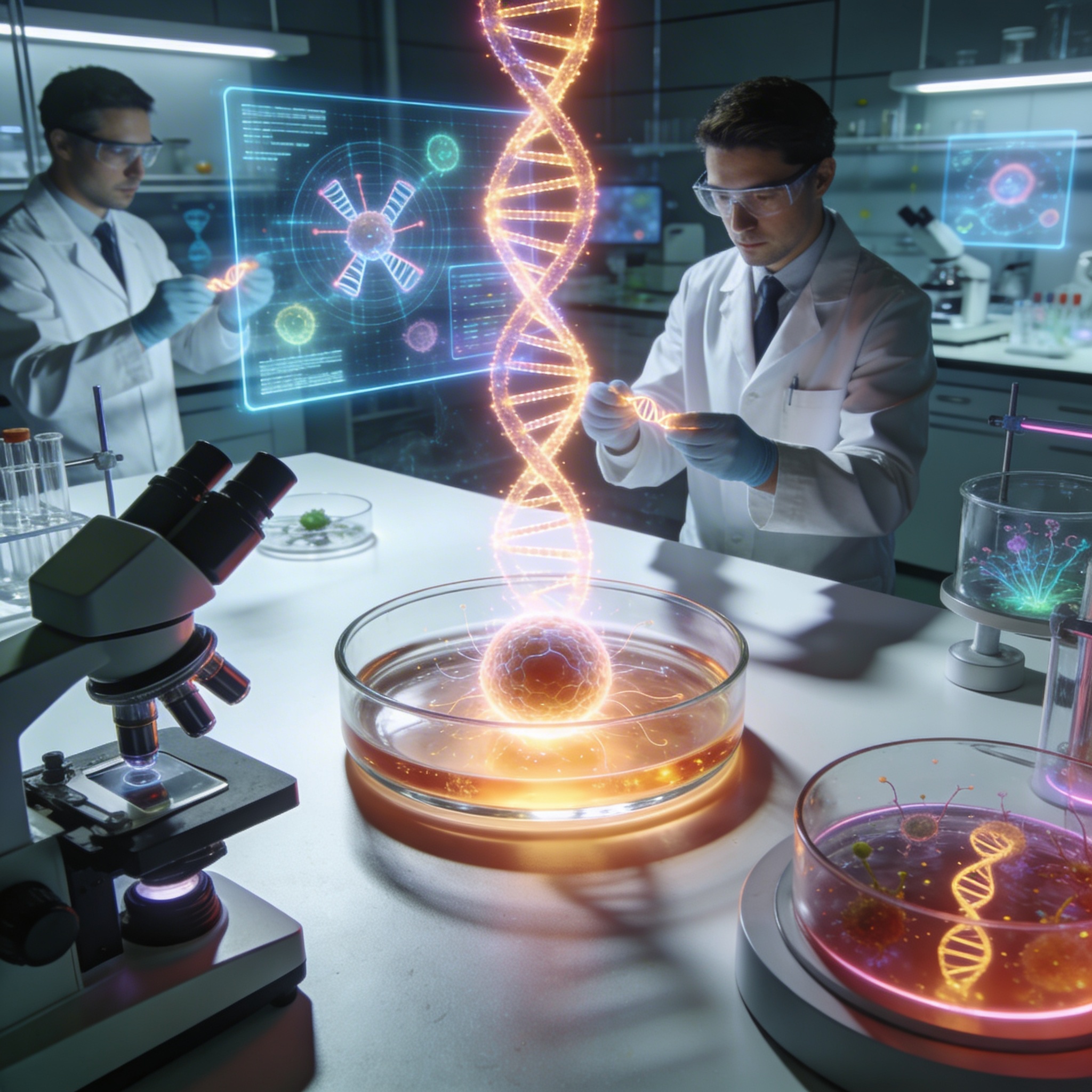
Imagine opening the instruction manual for a living cell, erasing the parts that don't serve you, and writing entirely new ones from scratch. Not editing, not tweaking — but composing. This is not science fiction. This is synthetic biology, and it is happening right now in laboratories across the world. Scientists are engineering organisms to fight cancer, devour plastic, produce clean fuels, and manufacture medicines that nature never thought to invent. The question is no longer whether we can redesign life. The question is how far we are willing to go — and how fast we are prepared to move.
Imagine opening the instruction manual for a living cell, erasing the parts that don't serve you, and writing entirely new ones from scratch. Not editing, not tweaking — but composing. This is not science fiction. This is synthetic biology, and it is happening right now in laboratories across the world. Scientists are engineering organisms to fight cancer, devour plastic, produce clean fuels, and manufacture medicines that nature never thought to invent. The question is no longer whether we can redesign life. The question is how far we are willing to go — and how fast we are prepared to move.
The Blueprint of a Revolution
Biology has always been a code. Four letters — A, T, C, G — arranged across billions of base pairs spell out every living thing that has ever existed on this planet. For most of human history, we could only read that code. Then came genetic engineering, which let us copy and paste small fragments. Now, synthetic biology has handed us something far more powerful: the ability to write entirely new sequences, design novel biological parts, and assemble them into living systems that have never existed in nature [1].
At its core, synthetic biology — or SynBio — is an area of scientific research that merges biology with engineering, computer science, and chemistry to redesign biological components, systems, and interactions from the ground up [1]. Think of it like software development, but instead of writing code for a computer, researchers are writing code for living cells. They build standardized biological "parts" — promoters, switches, sensors, and circuits — and combine them like modular components to produce a desired function [9]. A cell can be programmed to detect a tumor and release a targeted drug. A bacterium can be rewired to produce insulin, biofuels, or biodegradable plastics.
The field traces its modern origins to the early 2000s, when researchers began formalizing the idea of biological standardization. But the pace of progress has accelerated dramatically in recent years, driven by exponential improvements in DNA reading and writing technologies, as well as the explosive rise of artificial intelligence [6]. What once took years and millions of dollars — sequencing a genome, synthesizing a gene — now takes days and costs a fraction of the price. This compression of time and cost has flung open the laboratory doors to a new generation of researchers, startups, and innovators who are translating the theoretical promise of SynBio into tangible, commercial reality.
The ambition runs deep. Scientists at institutions around the world are no longer satisfied with modifying existing organisms. According to researchers cited in *Nature*, those who have spent more than a decade working toward designing genomes entirely from scratch say that this once-audacious goal now seems genuinely tangible [3]. The frontier has moved. The blueprint of life is no longer just something we inherit. Increasingly, it is something we design.
---
""The blueprint of life is no longer just something we inherit. Increasingly, it is something we design.""
From Lab Bench to Global Market
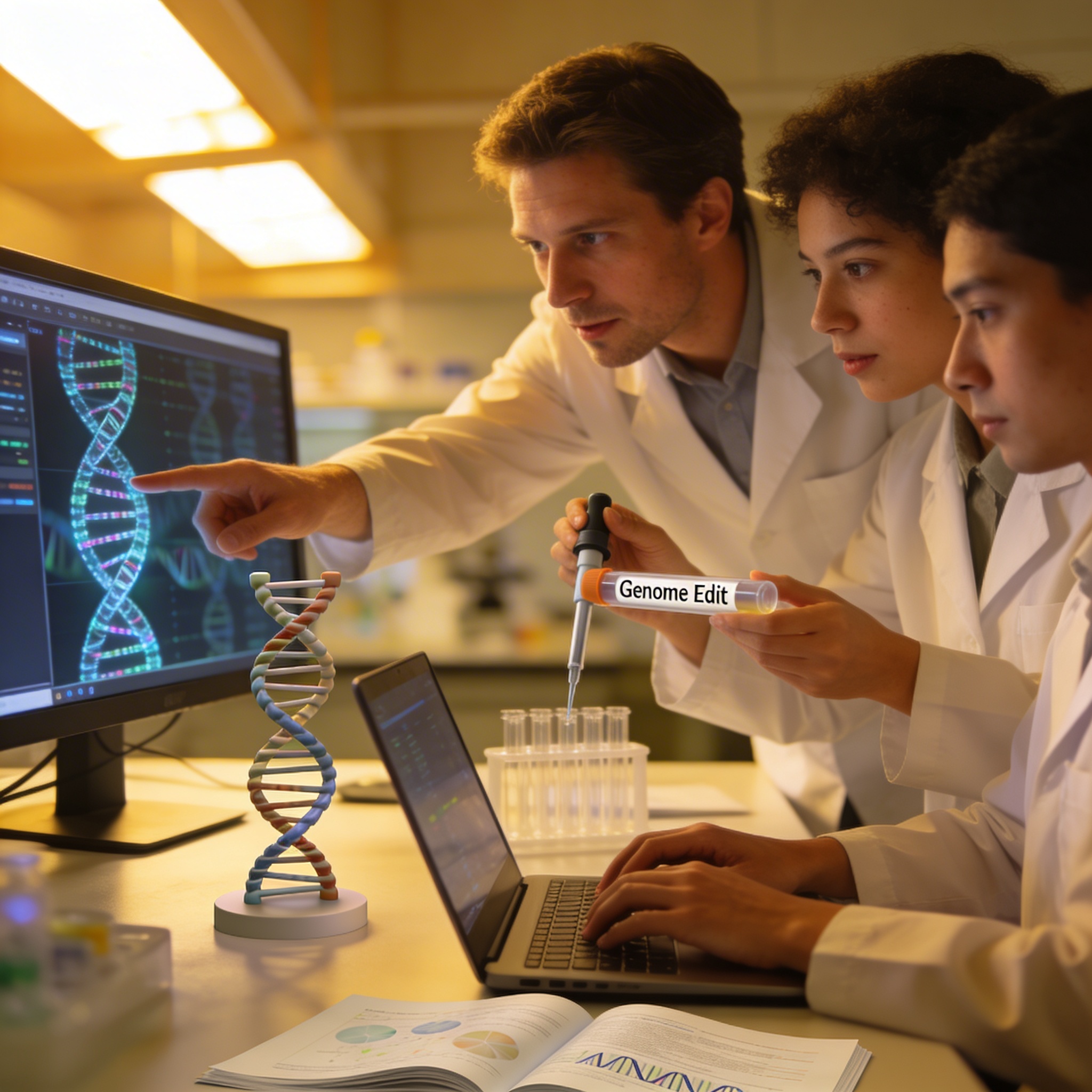
The numbers alone tell a story of extraordinary momentum. According to Coherent Market Insights, the global synthetic biology market was valued at an estimated USD $21.90 billion in 2025, and is projected to surge to USD $90.73 billion by 2032 [4]. That is a near-quadrupling in under a decade, driven by demand across healthcare, agriculture, industrial biotechnology, and materials science. In the United States alone, the domestic SynBio market is forecast to surpass USD $30.76 billion by 2034, according to industry analysts [24].
The applications are breathtaking in their range. In medicine, synthetic biology is enabling the development of next-generation therapies that go far beyond conventional pharmaceuticals. Researchers at MIT, for instance, are using a combination of synthetic biology and artificial intelligence to design small proteins capable of disabling specific bacterial pathogens — a direct assault on the global antimicrobial resistance crisis, which kills hundreds of thousands of people annually [MIT/recent news]. In oncology, engineered cell therapies are being programmed to identify and destroy cancer cells with a precision that traditional chemotherapy cannot match [7].
Agriculture is another frontier being quietly transformed. Synthetic biology companies are developing crops engineered to fix their own nitrogen — eliminating the need for synthetic fertilizers, which are both carbon-intensive and environmentally damaging. Others are creating drought-resistant strains, or plants capable of producing pharmaceutical compounds alongside their regular harvests [10].
The iGEM (International Genetically Engineered Machine) Foundation's 2025 competition offered a vivid snapshot of where student innovators are directing their energies. Teams presented projects ranging from plastic-eating plants to AI-guided therapeutic systems, demonstrating that the next wave of SynBio breakthroughs is already being prototyped in university labs around the world [8]. Industry leaders at SynbiTECH 2025 identified several dominant trends set to define 2026: the deepening integration of AI into biological design, the maturation of cell-free systems, and the rapid scaling of biosynthetic manufacturing [5].
The commercial engine is running. The ethical conversation, however, is only just beginning.
---
""The marriage of silicon and carbon, of code and cell, is producing a new kind of scientist — one who is as comfortable writing Python as they are pipetting.""
The AI Accelerant — When Machines Learn to Write Genomes
If synthetic biology is the revolution, artificial intelligence is the accelerant. The convergence of these two fields is producing capabilities that would have seemed implausible even five years ago. AI models are now being trained on vast libraries of genomic data, learning the deep grammatical rules of biological sequences — and beginning to generate entirely new ones [3]. The implications are profound.
One of the most striking recent developments is the emergence of large-scale genomic AI models. Evo2, a system described by researchers at HPC Wire, represents a new class of tool that could help scientists design entire genomes from scratch, rather than modifying existing ones [HPC Wire/recent news]. According to *Nature*, AI's ability to "write" genomes — composing functional genetic sequences the way a language model composes sentences — is moving synthetic biology from a craft discipline into something approaching an engineering science [3]. The design cycle, once measured in months, is compressing into days.
Stanford's Center for Emerging Technology Research has characterized synthetic biology as a discipline that now sits at the explicit intersection of biology, engineering, and computer science, with AI serving as the connective tissue between all three [12]. This integration is enabling what researchers call "design-build-test-learn" cycles — iterative loops in which AI proposes a biological design, scientists build it in the lab, test its performance, and feed the results back into the model to generate an improved version. The loop runs faster with each iteration.
The practical applications of AI-assisted SynBio are already reaching patients and markets. Arthur D. Little's Blue Shift report on synthetic biology highlights how AI-driven biological discovery is accelerating drug development timelines, improving the precision of therapeutic design, and opening up entirely new classes of treatments for diseases that have resisted conventional approaches [7]. Biosynthetic manufacturing — using engineered organisms as living factories — is also benefiting, as AI optimizes metabolic pathways to maximize yield and minimize waste.
The marriage of silicon and carbon, of code and cell, is producing a new kind of scientist: one who is as comfortable writing Python as they are pipetting. And it is producing a new kind of biology — one that moves at the speed of computation.
---

""Synthetic biology could define the twenty-first century in the way that digital technology defined the twentieth — and the organisms that will make it happen are already being built.""
Power, Promise, and the Price of Playing God
No technology this powerful arrives without consequence. Synthetic biology sits at a crossroads of extraordinary promise and serious ethical peril, and the conversation about how to govern it has never been more urgent. The same tools that allow scientists to engineer bacteria that produce life-saving insulin could, in the wrong hands, be used to reconstruct dangerous pathogens or design entirely novel biological threats. The dual-use dilemma is not hypothetical — it is structural, embedded in the very nature of the technology itself [14].
The Bioethics Observatory has drawn particular attention to the Synthetic Human Genome Project, which raises the possibility of synthesizing human DNA from scratch — a milestone that forces an immediate reckoning with questions of identity, consent, and the boundaries of scientific authority [bioethicsobservatory.org/recent news]. Who owns a synthetic genome? What rights, if any, does a synthetic organism possess? These are not questions that science alone can answer, and yet the pace of scientific progress is outrunning the pace of policy deliberation with uncomfortable speed.
Regulatory frameworks are struggling to keep up. The OECD has acknowledged that existing governance structures were not designed with synthetic biology in mind, and has called for new international approaches that balance innovation with biosecurity [14]. The challenge is compounded by the democratization of the technology itself — as DNA synthesis becomes cheaper and more accessible, the ability to engineer organisms is no longer confined to well-funded research institutions. Garage biotech, once a fringe curiosity, is becoming a genuine consideration for biosecurity agencies.
And yet the promise is real, and it is vast. SynBioBeta, one of the field's leading industry forums, has argued compellingly that synthetic biology could define the twenty-first century in the way that digital technology defined the twentieth [20]. The tools to cure diseases, reverse environmental damage, and build a more sustainable industrial economy are being assembled, base pair by base pair, in laboratories from Boston to Beijing. The scientists working in this field are not naive about the risks. Most are deeply committed to responsible development, open science, and ethical oversight.
The story of synthetic biology is, ultimately, the oldest story in human civilization: the story of a species that refuses to accept the world as it is, and insists on remaking it. The difference now is that we are not reshaping stone or steel. We are reshaping life itself.
---
Sources & References 26
- visualcapitalist.com
- facebook.com
- nature.com
- coherentmarketinsights.com
- synbicite.com
- syntheticbiologysummit.com
- adlittle.com
- labiotech.eu
- omicsonline.org
- tech4future.info
- link.springer.com
- setr.stanford.edu
- linkedin.com
- oecd.org
- pmc.ncbi.nlm.nih.gov
- en.wikipedia.org
- blog.bccresearch.com
- a.mahiti.org
- synbitech.com
- synbiobeta.com
- ddw-online.com
- youtube.com
- alliedacademies.org
- biospace.com
- biocompare.com
- geneticliteracyproject.org