The AI Revolution Isn't Coming — It's Already Here
From agentic systems to quantum-powered intelligence, 2026 is the year artificial intelligence stops being a promise and starts being infrastructure.
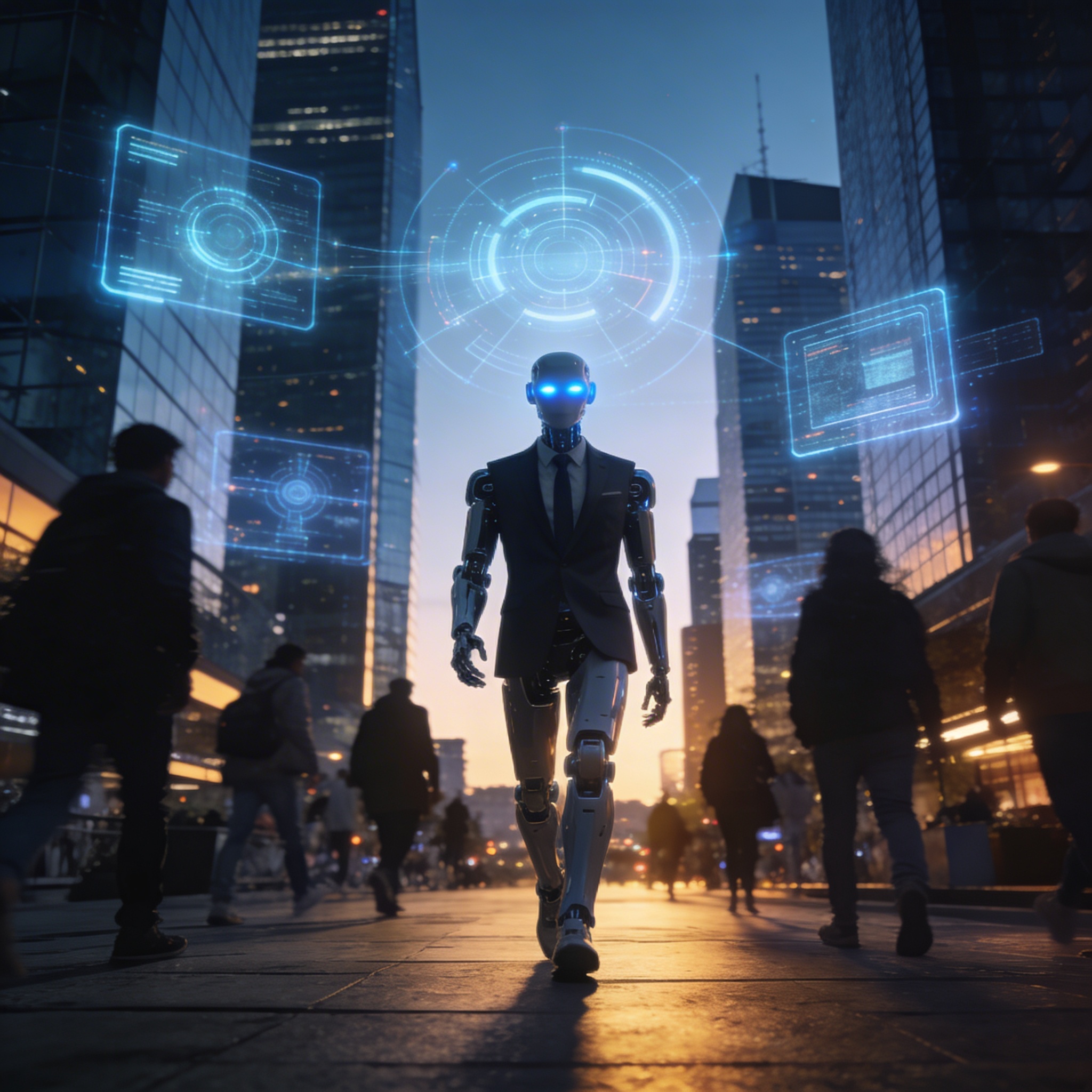
Somewhere between the breathless hype of 2023 and the quiet reckoning of 2025, artificial intelligence stopped being a conversation about potential and became a conversation about consequence. In 2026, nearly 1.7 to 1.8 billion people have used AI in some form, with roughly 500 to 600 million engaging with AI tools on a daily basis, according to data compiled by Inc. Magazine. The technology is no longer knocking at the door of everyday life. It has walked in, sat down, and started rearranging the furniture. The question now isn't whether AI will change the world — it's whether the world is ready for the change that's already underway.
Somewhere between the breathless hype of 2023 and the quiet reckoning of 2025, artificial intelligence stopped being a conversation about potential and became a conversation about consequence. In 2026, nearly 1.7 to 1.8 billion people have used AI in some form, with roughly 500 to 600 million engaging with AI tools on a daily basis, according to data compiled by Inc. Magazine. The technology is no longer knocking at the door of everyday life. It has walked in, sat down, and started rearranging the furniture. The question now isn't whether AI will change the world — it's whether the world is ready for the change that's already underway.
The Rise of the AI Agent — From Tool to Teammate
For years, artificial intelligence was something you used. You typed a prompt, received an answer, and moved on. That paradigm is dissolving in 2026, replaced by something far more autonomous and, frankly, far more consequential: agentic AI. These are systems that don't simply respond to instructions — they plan, execute, adapt, and iterate across complex, multi-step tasks with minimal human intervention. According to Microsoft's 2026 AI trend report, agentic AI orchestration is one of the most transformative forces reshaping how organizations operate, enabling AI systems to function not as isolated tools but as collaborative, goal-oriented partners embedded directly into business workflows.
The implications are staggering. Consider a marketing team that once spent weeks coordinating campaign launches across design, copy, analytics, and distribution. In 2026, agentic systems can manage the entire pipeline — drafting content, A/B testing variations, analyzing performance data in real time, and adjusting strategy accordingly — while the human team focuses on higher-order creative decisions. This isn't science fiction. Companies across finance, healthcare, logistics, and software development are already deploying multi-agent frameworks that coordinate specialized AI models the way a conductor leads an orchestra.
Progress Software, in its analysis of the six AI trends that will actually matter in 2026, identifies agentic orchestration as the defining shift of this era — noting that the move from single-model AI to coordinated agent networks represents a leap in capability that few enterprises are fully prepared to harness. The challenge, of course, is trust. Delegating meaningful decisions to autonomous systems requires robust oversight mechanisms, clear accountability chains, and a cultural willingness to let go of certain controls. Organizations that crack that balance will gain an extraordinary competitive edge. Those that don't will find themselves outpaced by rivals who did.
What makes this moment particularly electric is the speed of adoption. According to PwC's 2026 AI Business Predictions report, more companies are following the lead of AI front-runners by adopting enterprise-wide strategies centered on top-down programs — meaning AI is no longer a departmental experiment but a boardroom imperative. The age of the AI teammate has officially begun.
---
""In 2026, trust is the most valuable currency in the AI economy — and governance is the only way to earn it.""
AI Factories and the Infrastructure Arms Race

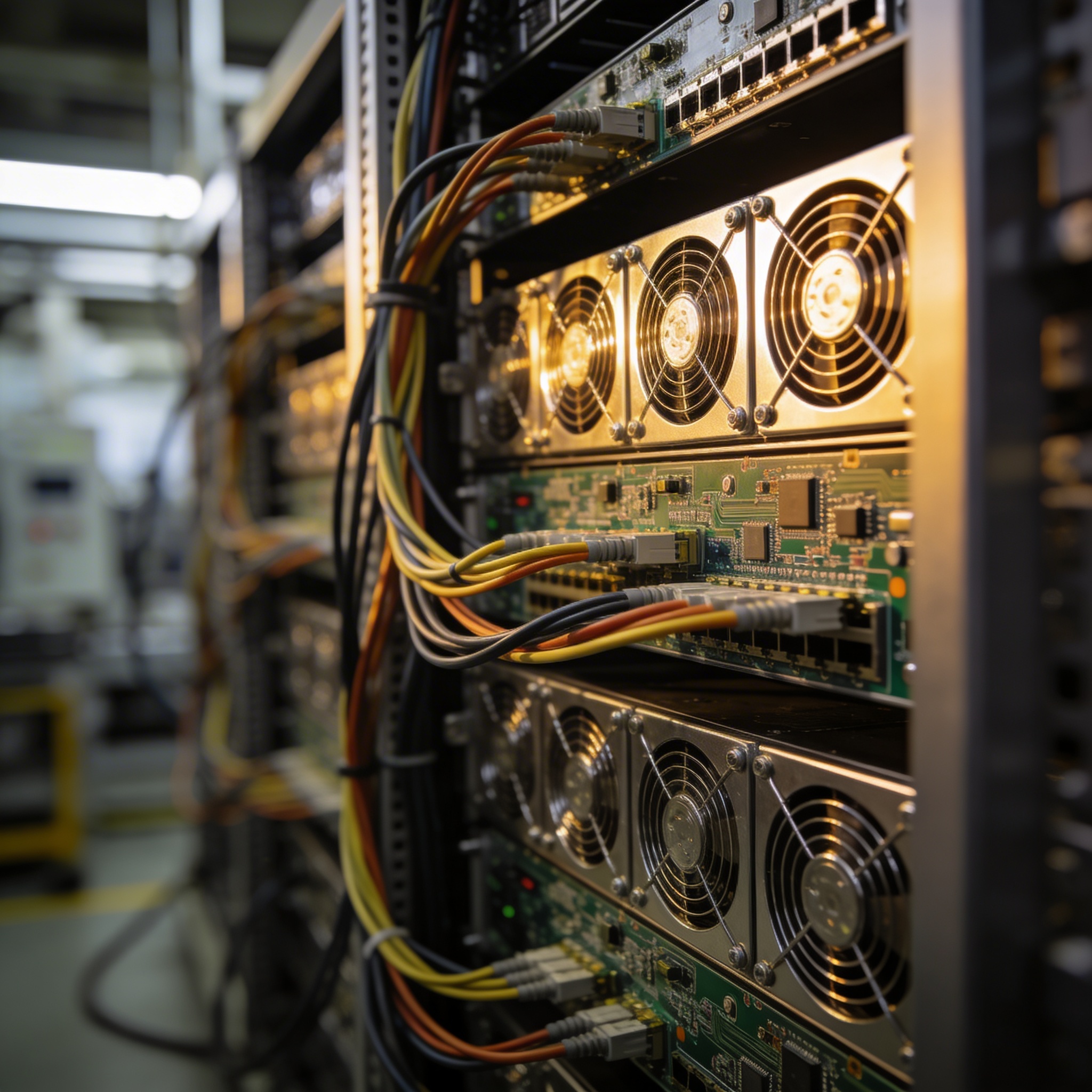
Behind every intelligent response, every autonomous agent, every real-time data analysis, there is an enormous and often invisible infrastructure humming with electricity, silicon, and ambition. In 2026, that infrastructure has become a competitive battleground in its own right. MIT Sloan Management Review describes the phenomenon bluntly: more organizations are going "all-in," constructing what analysts are calling "AI factories" — purpose-built environments where data flows in, intelligence flows out, and the entire enterprise is oriented around continuous AI production.
These AI factories are not metaphorical. They represent massive investments in data pipelines, model training environments, proprietary datasets, and the specialized talent required to operate them. IBM's 2026 tech trend analysis highlights that the infrastructure layer of AI — encompassing cloud architecture, edge computing, and increasingly, quantum-enhanced processing — is becoming as strategically important as the models themselves. A company with superior AI infrastructure can iterate faster, train more efficiently, and deploy more reliably than a competitor running on commodity cloud services.
The quantum dimension deserves particular attention. IBM, which has been among the most aggressive voices on quantum computing's near-term applications, notes that quantum-classical hybrid systems are beginning to demonstrate real advantages in optimization problems — the kind of complex, variable-rich scenarios that underpin logistics networks, drug discovery pipelines, and financial modeling. While fully fault-tolerant quantum computing remains on the horizon, the integration of quantum-enhanced modules into AI workflows is no longer a theoretical exercise.
The cost of this arms race, however, is not trivial. MIT Sloan's five-trend analysis warns that the AI investment bubble, while unlikely to burst catastrophically, will experience meaningful deflation as markets demand clearer returns on the hundreds of billions poured into AI infrastructure. Companies that built AI factories without coherent monetization strategies will face painful corrections. The winners in this infrastructure race won't simply be those who spent the most — they'll be those who spent the most intelligently, aligning infrastructure investment with specific, measurable business outcomes. In 2026, the factory floor of the future runs on data. The question is who built it well enough to last.
---
""The age of the AI teammate has officially begun, and the organizations that embrace it will rewrite the rules of competition.""
Governance, Security, and the Trust Imperative
Power without accountability is a recipe for chaos, and in 2026, the AI industry is learning this lesson with increasing urgency. As AI systems grow more capable and more deeply embedded in critical decisions — hiring, lending, medical diagnosis, criminal justice — the demand for robust governance frameworks has moved from advocacy talking point to regulatory reality. According to Info-Tech Research Group's 2026 AI Trends report, foundational AI principles are actively rewriting the rules of enterprise technology, compelling organizations to treat governance not as a compliance checkbox but as a core design principle.
Progress Software's trend analysis identifies security, governance, and controls as one of the six trends that will genuinely matter in 2026 — and for good reason. The attack surface for AI-powered systems is fundamentally different from traditional software. Adversarial inputs, model poisoning, data leakage through large language models, and the manipulation of agentic systems represent threats that conventional cybersecurity frameworks were never designed to address. IBM's research underscores this point, noting that AI security is now a distinct discipline requiring specialized expertise at the intersection of machine learning and threat intelligence.
The regulatory landscape is tightening in parallel. The European Union's AI Act, which came into force in phased stages, is compelling multinationals to classify AI systems by risk level and implement corresponding safeguards. In the United States, a patchwork of state-level regulations and sector-specific federal guidelines is creating a complex compliance environment that legal and technical teams are scrambling to navigate. For enterprises operating globally, this means AI governance is no longer a single policy document — it is an ongoing, dynamic function requiring dedicated resources and executive sponsorship.
What's emerging from this pressure is something genuinely valuable: a culture of AI accountability. Organizations that invest in explainability tools, audit trails, bias detection systems, and transparent model documentation are not just managing risk — they are building the kind of trust that enables deeper, more ambitious AI deployment over time. In 2026, trust is the most valuable currency in the AI economy, and governance is how you earn it.
---

""The future of work in the age of AI is not a zero-sum contest between humans and machines — it is a collaboration, provided we are honest about the transitions required.""
The Future of Work — Augmentation, Disruption, and Opportunity
No conversation about AI in 2026 is complete without confronting the question that keeps executives, economists, and workers up at night: what is this doing to jobs? The answer, characteristically, is complicated. Forbes contributor Charles Towers-Clark, writing in his ten predictions for AI and the future of work, argues that the near-term picture is less about mass unemployment and more about profound role transformation — a wholesale reimagining of what human labor means in an AI-augmented economy.
The data supports a nuanced view. National University's compilation of 131 AI statistics and trends for 2026 reveals that AI adoption is creating new job categories even as it displaces others. Roles centered on AI oversight, prompt engineering, model evaluation, ethics review, and human-AI collaboration design are proliferating rapidly. Meanwhile, highly repetitive cognitive tasks — data entry, basic report generation, routine customer service — are being absorbed into automated workflows at an accelerating pace. The net employment effect remains a subject of genuine debate among economists, but the directional shift is unmistakable.
Microsoft's seven AI trends to watch in 2026 frame this evolution optimistically, describing AI as a "true partner" that boosts teamwork, accelerates research, and enhances individual productivity in ways that free humans for higher-value work. There is real evidence for this framing. In software development, AI coding assistants — another trend highlighted by Progress Software — are enabling developers to write, debug, and deploy code significantly faster, compressing timelines that once took weeks into days. The developer doesn't disappear; their leverage multiplies.
The deeper challenge is equity. Not every worker has equal access to AI tools, AI training, or AI-augmented opportunities. According to Inc. Magazine's analysis of AI strategies for 2026, organizations that invest in workforce reskilling alongside AI deployment consistently outperform those that treat the two as separate initiatives. The future of work in the age of AI is not a zero-sum contest between humans and machines. It is a collaboration — provided we are deliberate, inclusive, and honest about the transitions required to make it work for everyone.
---