
There is a quiet revolution happening inside the devices you use every day — inside your car's dashboard, your phone's camera module, your smart home thermostat. It doesn't announce itself with fanfare. It hums invisibly, etched into wafers of silicon no larger than a fingernail. Custom chips — purpose-built processors designed for one company, one product, one singular ambition — are no longer the exclusive domain of Silicon Valley's elite. They are becoming the defining competitive weapon of the modern industrial age, and every sector from mobility to medicine is feeling the tremors.
The Trillion-Dollar Foundation Beneath Everything
The numbers alone are staggering. According to Deloitte's 2026 Global Semiconductor Industry Outlook, the global semiconductor market is expected to reach $975 billion in annual sales in 2026 — a historic peak driven in no small part by an intensifying appetite for artificial intelligence 3. That figure is not merely a financial milestone. It is a signal: the world has quietly decided that silicon is the most valuable raw material of the 21st century, more consequential than oil, more transformative than steel.
For most of the industry's history, the dominant model was simple. Companies like Intel and AMD designed general-purpose chips, and everyone else bought them. It was efficient, scalable, and — for a long time — entirely sufficient. But the demands of the modern era have shattered that consensus. AI workloads, real-time sensor processing, and ultra-low-latency applications have exposed the fundamental limitations of one-size-fits-all silicon. General-purpose chips waste energy running instructions irrelevant to the task at hand. In a world where milliseconds and milliwatts matter enormously, that waste is intolerable.
Enter custom silicon. Also called application-specific integrated circuits (ASICs) or custom system-on-chips (SoCs), these processors are architected from the ground up to perform a narrow set of tasks with extraordinary efficiency. Apple's M-series chips — the clearest consumer-facing example — redefined what a laptop could do by integrating CPU, GPU, and neural engine onto a single die tailored precisely to Apple's software ecosystem. Google built its Tensor Processing Units to accelerate its own AI models. Amazon designed Graviton chips to optimize its cloud infrastructure. The pattern is unmistakable.
According to Omdia's 2026 Semiconductor Trends report, the data processing segment is set to surpass 50 percent of total semiconductor revenue for the first time in 2026, driven by data center and AI-related demand 2. PwC's semiconductor outlook reinforces the point, noting that AI advancements and geopolitical shifts are simultaneously accelerating investment in purpose-built silicon across multiple verticals 1. The era of the general-purpose chip is not over — but its supremacy most certainly is.
---
""A custom chip is a moat — intellectual property that a competitor cannot simply purchase from a catalog.""
Automobiles Are Becoming Computers That Happen to Have Wheels
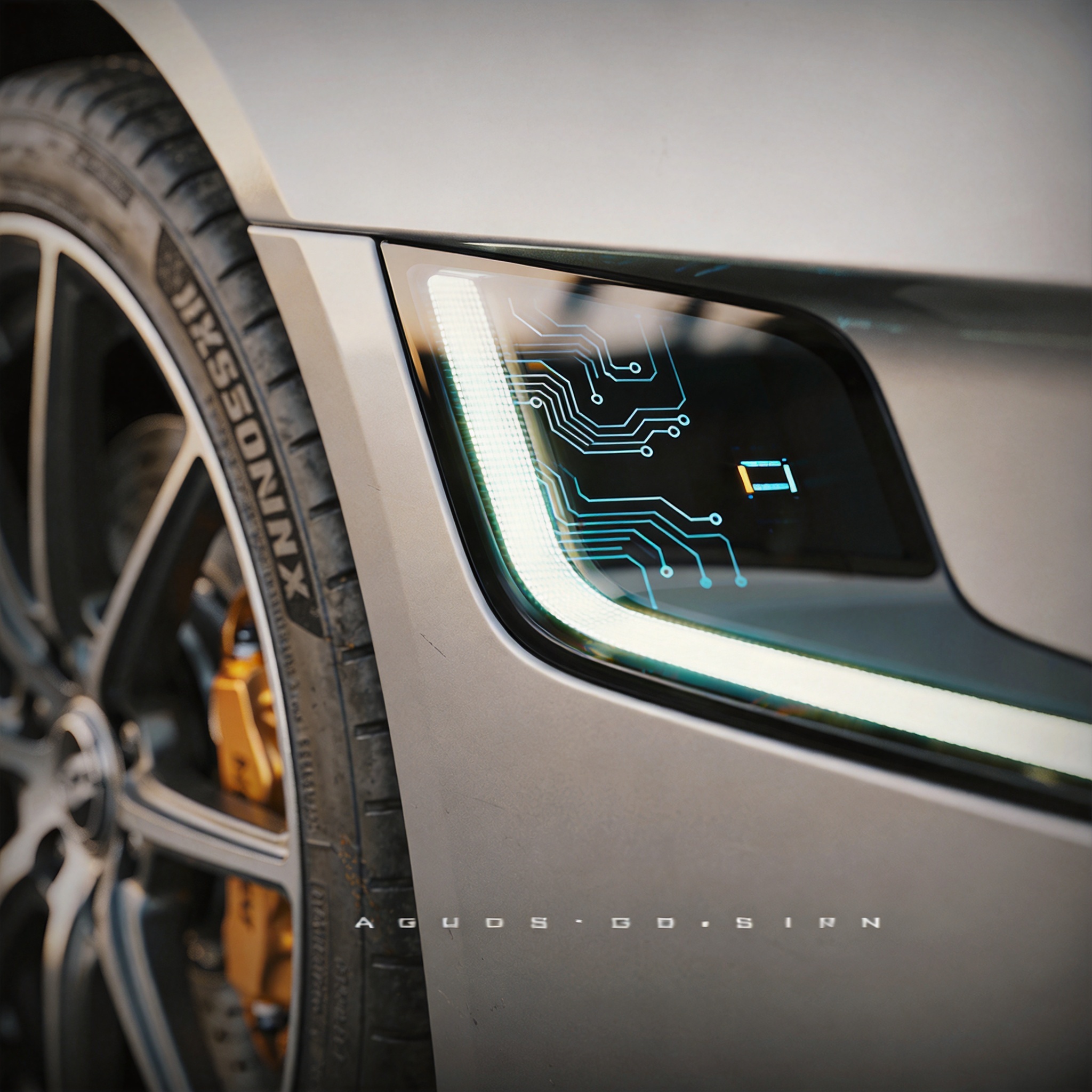
No industry illustrates the custom silicon revolution more dramatically than automotive. A modern vehicle contains dozens of chips managing everything from braking systems to infotainment screens, but the next generation of automobiles demands something far more sophisticated. Advanced Driver Assistance Systems (ADAS), in-cabin AI monitoring, and fully autonomous navigation require chips capable of processing terabytes of sensor data in real time, under extreme thermal conditions, at power budgets that won't drain a battery pack in twenty minutes. Off-the-shelf processors simply cannot meet that brief.
CES 2026 made this transformation viscerally clear. Autonomous vehicle technology was among the event's dominant themes, with robotaxi platforms from Waymo and a wave of new silicon partnerships demonstrating how deeply custom chips have embedded themselves in the future of mobility 5. Qualcomm's Snapdragon Ride platform — a purpose-built automotive SoC — has become a reference architecture for multiple major OEMs, designed specifically to handle the parallel demands of sensor fusion, AI inference, and real-time decision-making 16. The chip is not borrowed from a smartphone line. It was conceived, from its very first transistor, for the road.
According to a BusinessWire market analysis, the next-generation automotive computing market is reaching a critical inflection point as vehicles evolve into what researchers are now calling "AI supercomputers on wheels," with ADAS and centralized compute architectures driving a decade-long investment cycle through 2036 12. PS Market Research similarly projects the automotive chip market's robust expansion as electrification and autonomy converge into a single, silicon-hungry supercycle 15.
Arm's 2026 technology predictions add another dimension to this story. The company forecasts that modular chiplet designs — where multiple smaller chips are interconnected to form a larger, more flexible processing unit — will redefine how automotive silicon is designed and scaled 7. Rather than building one monolithic chip for every vehicle variant, manufacturers can mix and match chiplets to meet the precise performance and cost requirements of each platform. It is a manufacturing philosophy borrowed from software's modular architecture, applied to hardware. The result is faster iteration, lower waste, and silicon that fits the car — not the other way around.
---
""The era of the general-purpose chip is not over — but its supremacy most certainly is.""
Cameras, Creativity, and the Computational Imaging Explosion
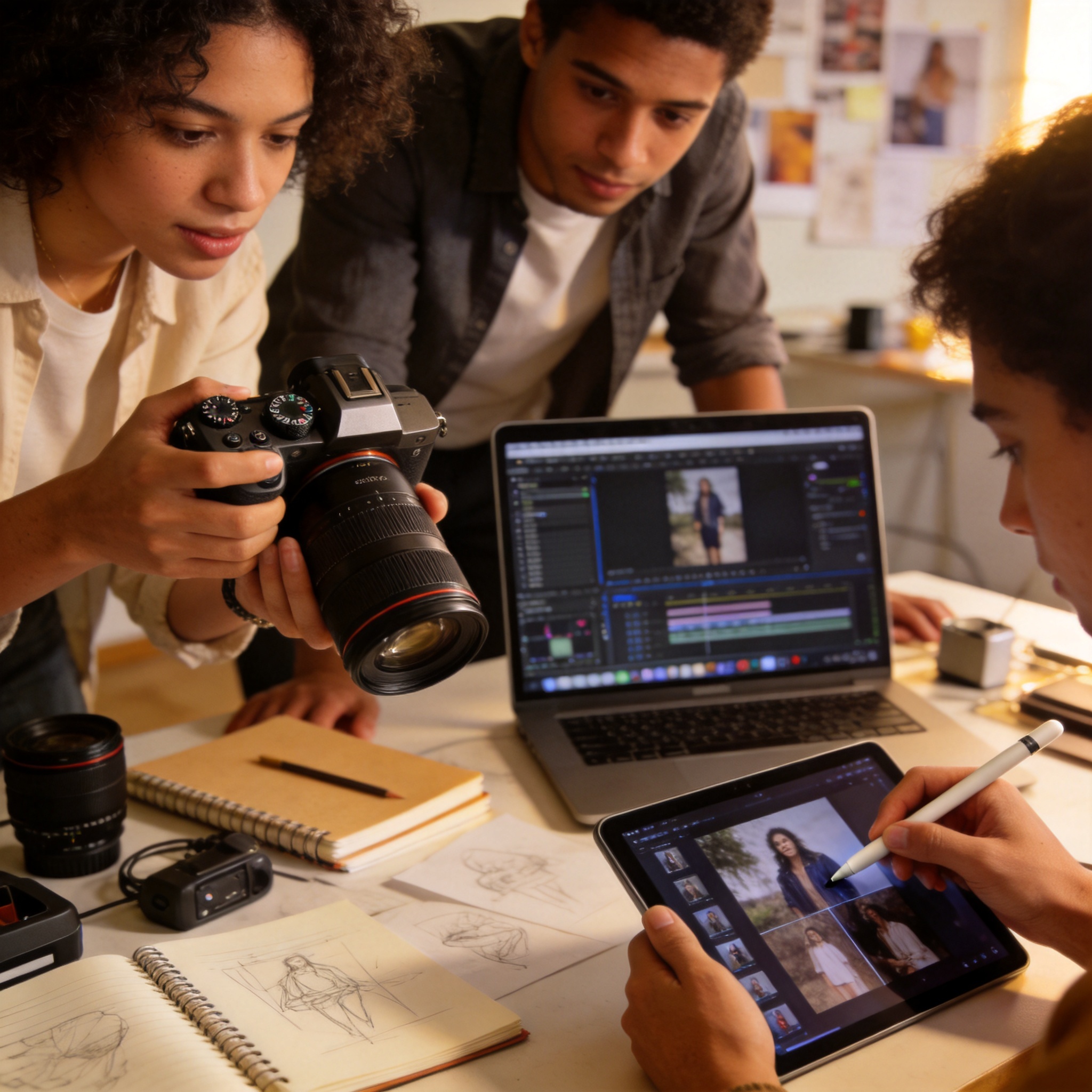
The smartphone camera is perhaps the most intimate example of custom silicon's reach into daily life. What consumers experience as a "better photo" is, in engineering terms, the output of a highly specialized image signal processor (ISP) — a custom chip that performs billions of calculations per second to transform raw photon data into the polished, vibrant images people post to social media without a second thought. Apple's ISP, integrated into its A-series and M-series chips, processes multiple exposure frames simultaneously, applies computational depth mapping, and runs AI-driven noise reduction — all before the shutter sound has finished playing.
Google's Tensor chips, now in their third generation across the Pixel smartphone line, were designed with computational photography as an explicit priority. The chip's neural processing block handles scene understanding, real-time HDR merging, and video stabilization in ways that a licensed, general-purpose processor could not match at the same power envelope. The result is a camera experience so deeply tied to its underlying silicon that it cannot be replicated simply by swapping software. The hardware and the creative output are inseparable.
This dynamic extends far beyond smartphones. Professional cinema cameras from companies like RED and Blackmagic Design now incorporate custom processing engines to handle RAW video formats at resolutions and frame rates that would overwhelm conventional silicon. Surveillance and security systems rely on purpose-built vision chips that can run AI-based object detection at the edge — on the device itself — without sending data to a cloud server. Medical imaging equipment uses custom ASICs to reconstruct MRI and CT scan data with the precision that clinical diagnostics demand.
According to Everest Group's analysis of game-changing semiconductor technologies, the convergence of AI and custom silicon in imaging applications represents one of the most consequential technological shifts of the current decade, enabling capabilities that were computationally impossible just five years ago 6. Global IMI's review of 2025's top semiconductor breakthroughs similarly highlights AI-driven imaging chips as a defining category of innovation, one that will only accelerate as camera systems migrate into autonomous vehicles, medical devices, and industrial inspection platforms 8.
---

""In the decade ahead, the companies that control their silicon will control their destiny.""
The Geopolitical Stakes and the Road Ahead
Custom silicon is not merely a technology story. It is a geopolitical one. The race to design and manufacture purpose-built chips has drawn governments into the fray with a ferocity not seen since the space race. The United States, the European Union, Japan, South Korea, and China are all investing heavily in domestic semiconductor capacity, motivated by the hard lesson that dependence on foreign chip supply chains is a national security vulnerability. PwC's semiconductor outlook explicitly identifies geopolitical shifts as one of the primary forces reshaping the industry's structure 1.
The Semiconductor Industry Association's 2025 State of the Industry report underscores the strategic weight of this moment, documenting how government incentives and private investment are flowing simultaneously into chip design, advanced packaging, and fabrication capacity 24. Arm's 2026 predictions note that silicon innovation will increasingly emerge from new materials — including gallium nitride and silicon carbide — alongside 3D stacking and chiplet integration, all of which require sophisticated domestic manufacturing ecosystems to realize their potential 7.
For companies outside the traditional technology sector, the implications are equally profound. Automakers, healthcare companies, agricultural technology firms, and consumer electronics brands are all evaluating whether to join the ranks of Apple, Google, and Amazon by developing proprietary silicon. The strategic logic is compelling: a custom chip is a moat. It is intellectual property that a competitor cannot simply purchase from a catalog. It encodes years of engineering insight into hardware, making it extraordinarily difficult to replicate.
Yahoo Finance reported in early 2026 that Marvell Technology was experiencing strong momentum in its AI-focused custom silicon business, with its AI XPU offerings gaining significant traction — a data point that illustrates how the custom chip economy is expanding well beyond the handful of hyperscalers who pioneered it [sourced from recent news]. McKinsey's technology trends outlook similarly frames custom silicon as a foundational layer of competitive advantage across virtually every industry vertical 29. The message from every corner of the research landscape is consistent and urgent: in the decade ahead, the companies that control their silicon will control their destiny.
The chip is no longer just a component. It is the strategy itself.
---