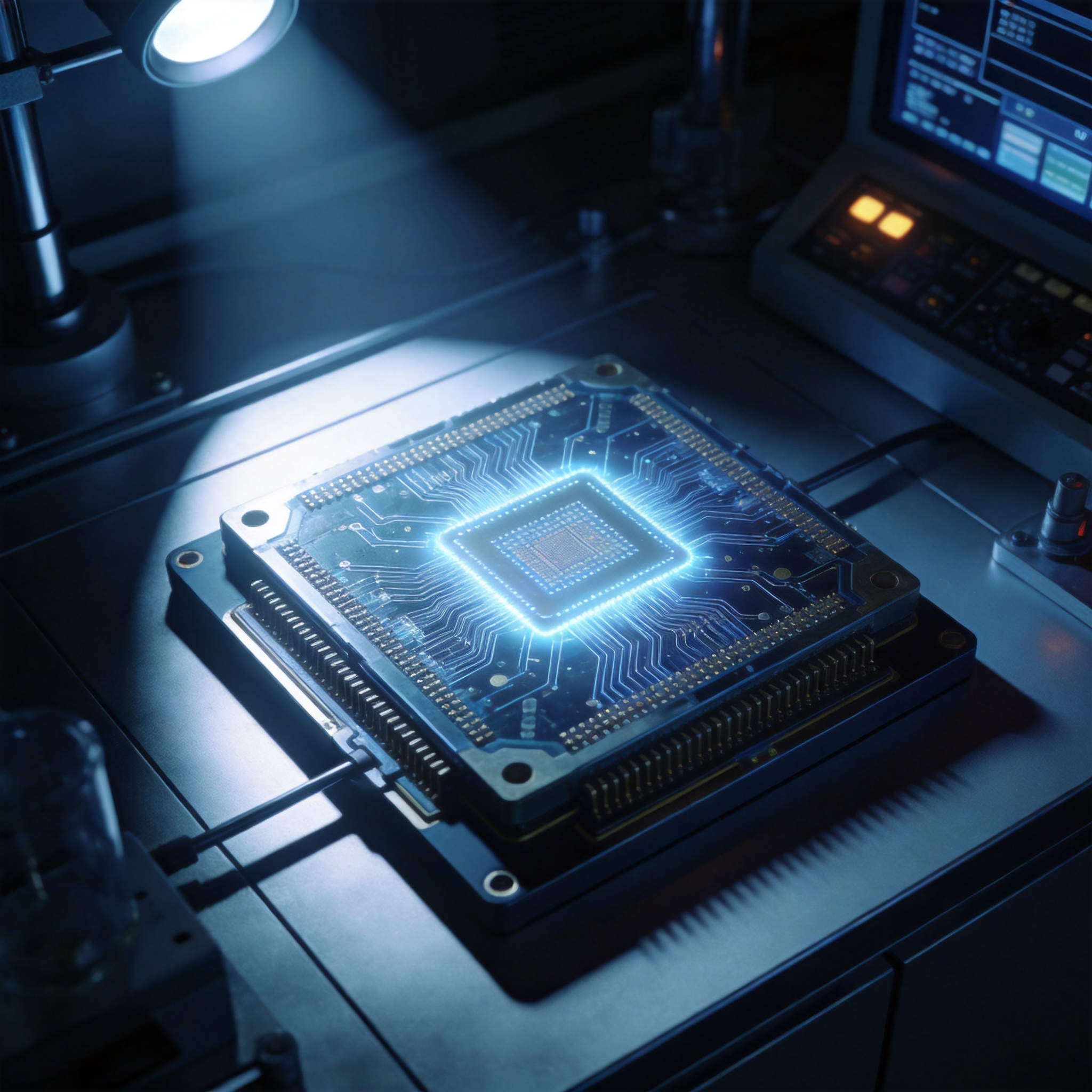
For decades, quantum computing occupied a peculiar space in the technological imagination — perpetually ten years away, forever promising, never quite arriving. That story is changing. With breathtaking speed, quantum chips are crossing the threshold from carefully controlled laboratory environments into the messy, demanding world of commercial application. Billions of dollars in investment, a new generation of error-corrected processors, and a growing roster of industry pilots are converging into something that looks, unmistakably, like a tipping point. The quantum era is not coming. It is here.
From Physics Experiment to Engineering Problem
There is a moment in the life of every transformative technology when it stops being a science project and starts being an engineering challenge. For quantum computing, that moment has arrived. According to McKinsey's Quantum Technology Monitor 2025, the industry has definitively shifted from concept validation to commercial transition, with quantum sensing, computing, and communication all advancing along parallel tracks 1. The language has changed inside the world's leading research institutions. Scientists are no longer asking whether quantum processors can outperform classical computers on specific tasks. They are asking how to make them reliable, scalable, and cost-effective enough to deploy at industrial scale.
The shift is visible in the hardware itself. IBM, Google, and a growing constellation of startups have published detailed roadmaps that stretch from today's noisy intermediate-scale quantum devices toward fault-tolerant systems capable of running complex, real-world algorithms 11. Google's Willow chip, announced in late 2024, demonstrated the ability to perform a benchmark computation in under five minutes that would take a classical supercomputer an estimated 10 septillion years — a result that sent shockwaves through the research community and landed on the front pages of publications far beyond the technology press 15.
But raw computational power is only part of the story. The deeper transformation is infrastructural. Quantum processors require near-absolute-zero operating temperatures, extraordinary isolation from environmental noise, and sophisticated classical control systems to function. Building these environments reliably, repeatedly, and affordably is the engineering mountain that companies are now climbing. Researchers recently pushed chip design forward by using 7,000 GPUs to simulate every physical detail of a quantum chip before fabrication — a breakthrough that dramatically reduces costly trial-and-error manufacturing cycles 10. That kind of rigorous pre-production modeling is the hallmark of an industry growing up, moving from artisanal craft toward repeatable industrial process.
The transition from 2024 to 2026 has, as one detailed industry analysis put it, "definitively moved quantum computing out of the physics lab and into the engineering and infrastructure domain" 2. That sentence carries enormous weight. It signals that the central bottleneck is no longer theoretical understanding — it is execution.
---

"The central bottleneck is no longer theoretical understanding — it is execution, and the world's best engineers are now fully focused on solving it."
The Investment Surge Fueling Commercial Momentum
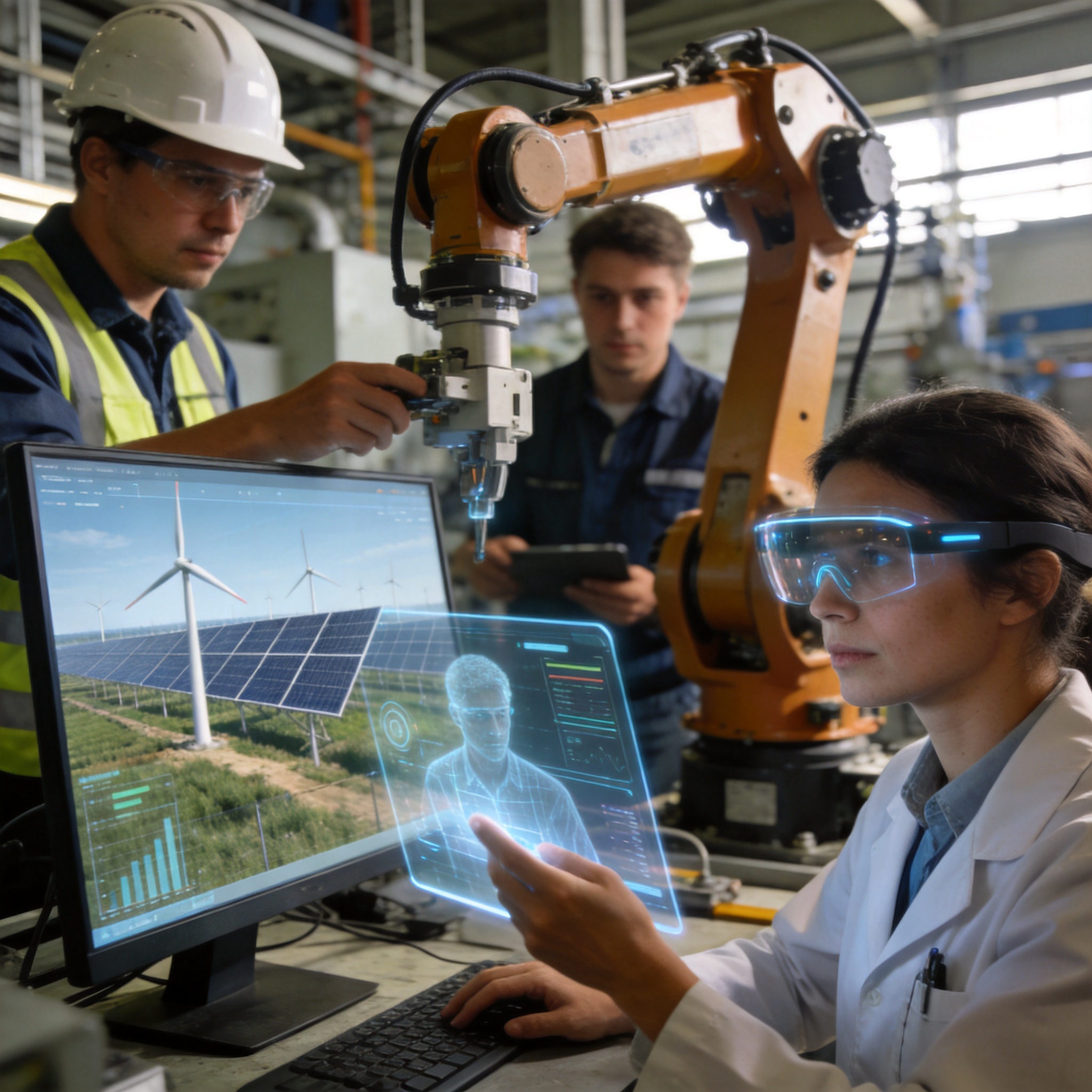
Money talks, and right now it is speaking in a language quantum researchers have never heard before. The financial community has moved from cautious curiosity to aggressive commitment, and the numbers are striking. Bain & Company projects that quantum computing could deliver up to $250 billion in economic impact as the technology matures, a figure that has focused the attention of boardrooms from Wall Street to Singapore 9. Venture capital, sovereign wealth funds, and the balance sheets of the world's largest technology companies are all flowing into the sector simultaneously.
IBM, Google, Microsoft, and Amazon have each staked out distinct quantum strategies, investing heavily in both hardware and the software ecosystems needed to make their platforms commercially viable 14. Microsoft, for its part, has bet on topological qubits — a fundamentally different physical approach to building quantum processors that the company believes will offer superior stability. Meanwhile, a new wave of specialized startups is targeting specific industry verticals rather than building general-purpose quantum systems, a pragmatic approach that is already generating early commercial traction 6.
The startup activity is particularly telling. MIT Sloan has noted that the pace of quantum startup formation, innovation, and funding deals has heated up dramatically, with enterprises across finance, pharmaceuticals, logistics, and materials science all launching pilot programs 5. These are not vanity projects. Financial institutions are exploring quantum algorithms for portfolio optimization and fraud detection. Pharmaceutical companies are using quantum simulation to model molecular interactions that classical computers cannot accurately replicate. Logistics giants are testing quantum-enhanced routing algorithms capable of solving combinatorial problems at a scale and speed that classical systems cannot match 3.
PwC's semiconductor industry outlook for 2026 identifies quantum as one of the defining technology transitions reshaping the chip industry's investment priorities, noting that fabrication techniques originally developed for classical semiconductors are being adapted and extended for quantum processor manufacturing 21. That cross-pollination of expertise and capital is accelerating timelines that once seemed impossibly optimistic. The money is not chasing a dream. It is chasing a market that is visibly materializing.
---
"Quantum is not replacing classical computing wholesale — it is augmenting it, handling the specific classes of problems where quantum mechanics offers a genuine, structural advantage."
The Industries Being Transformed First
Not every industry will feel quantum's impact at the same moment. The technology is arriving in waves, and the first wave is already washing over sectors where the computational advantage is most immediate and most measurable. Understanding which industries are leading the adoption curve reveals a great deal about where quantum hardware is genuinely mature enough to deliver value today — and where the promise still outpaces the reality.
Cybersecurity sits at the sharp edge of quantum's commercial arrival, though perhaps not in the way most people expect. The same processing power that makes quantum computers extraordinary problem-solvers also makes them capable, in principle, of breaking the encryption standards that protect the world's digital infrastructure. This threat has spurred a parallel industry: post-quantum cryptography. The National Institute of Standards and Technology finalized its first set of quantum-resistant encryption standards in 2024, and enterprises are now racing to implement them before sufficiently powerful quantum machines arrive 4. Banks, defense contractors, and critical infrastructure operators are among the most urgent adopters.
Drug discovery is another early frontier. Quantum simulation allows researchers to model the behavior of molecules at the quantum mechanical level — a task that is computationally intractable for even the most powerful classical supercomputers. Forbes has highlighted pharmaceutical and biotech companies as among the industries most likely to see near-term quantum advantage, with early pilots already demonstrating the technology's potential to compress drug development timelines 3. The ability to simulate protein folding, chemical reactions, and molecular binding with quantum accuracy could, over the next decade, fundamentally reshape how medicines are discovered and developed.
Financial services firms are equally active. Quantum algorithms for optimization and Monte Carlo simulation are being tested on real portfolio management problems, with early results suggesting meaningful performance gains over classical approaches 13. Spinquanta's 2025 industry analysis identified financial modeling, materials science, and supply chain optimization as the three domains most likely to see commercial quantum advantage within the next three to five years 6. These are not abstract predictions. They are grounded in active pilot programs generating real data.
The pattern emerging across these sectors is consistent: quantum is not replacing classical computing wholesale. It is augmenting it, handling the specific classes of problems — optimization, simulation, cryptography — where quantum mechanics offers a genuine, structural advantage.
---

"The lab is emptying. The world is filling up."
The Road Ahead — And the Honest Reckoning
Enthusiasm for quantum computing is entirely warranted. So is a clear-eyed assessment of what remains unresolved. The technology is advancing with genuine momentum, but the path between today's early commercial deployments and the full realization of quantum's transformative potential is still long, technically demanding, and uncertain in its timing. Anyone promising a precise date for "quantum supremacy" in every domain is either misinformed or overselling.
The central technical challenge remains error correction. Quantum processors are exquisitely sensitive to environmental disturbance — a stray vibration, a fluctuation in temperature, even cosmic radiation can introduce errors into a computation. Current quantum chips operate in what the industry calls the "noisy intermediate-scale quantum" era, meaning they are powerful enough to be interesting but not yet reliable enough for the most demanding commercial workloads 12. Achieving fault-tolerant quantum computing, where errors are detected and corrected faster than they accumulate, requires scaling qubit counts dramatically while simultaneously improving qubit quality — a formidable engineering challenge that no organization has yet fully solved.
Talent is another constraint. The pool of researchers and engineers who understand both quantum physics and software engineering deeply enough to build commercial applications is small, and the competition for that talent is fierce 7. Universities are expanding quantum engineering programs, and national governments — including those of the United States, China, the European Union, and the United Kingdom — have committed billions in public funding to build domestic quantum workforces 8. But building expertise takes time in ways that money alone cannot accelerate.
Phys.org's analysis of the field's trajectory argues that quantum technology now stands at a genuine turning point, with the gap between laboratory capability and commercial deployment narrowing faster than most industry observers predicted even three years ago 8. That assessment is echoed by Deloitte's technology trends research, which identifies quantum as one of the defining infrastructure investments of the late 2020s 27. The honest reckoning, then, is this: quantum chips are not a finished product. They are a rapidly maturing one. The commercial reality is not a destination that has been reached — it is a road that is being built, with extraordinary speed, by some of the most talented engineers and scientists alive today.
The lab is emptying. The world is filling up.
---